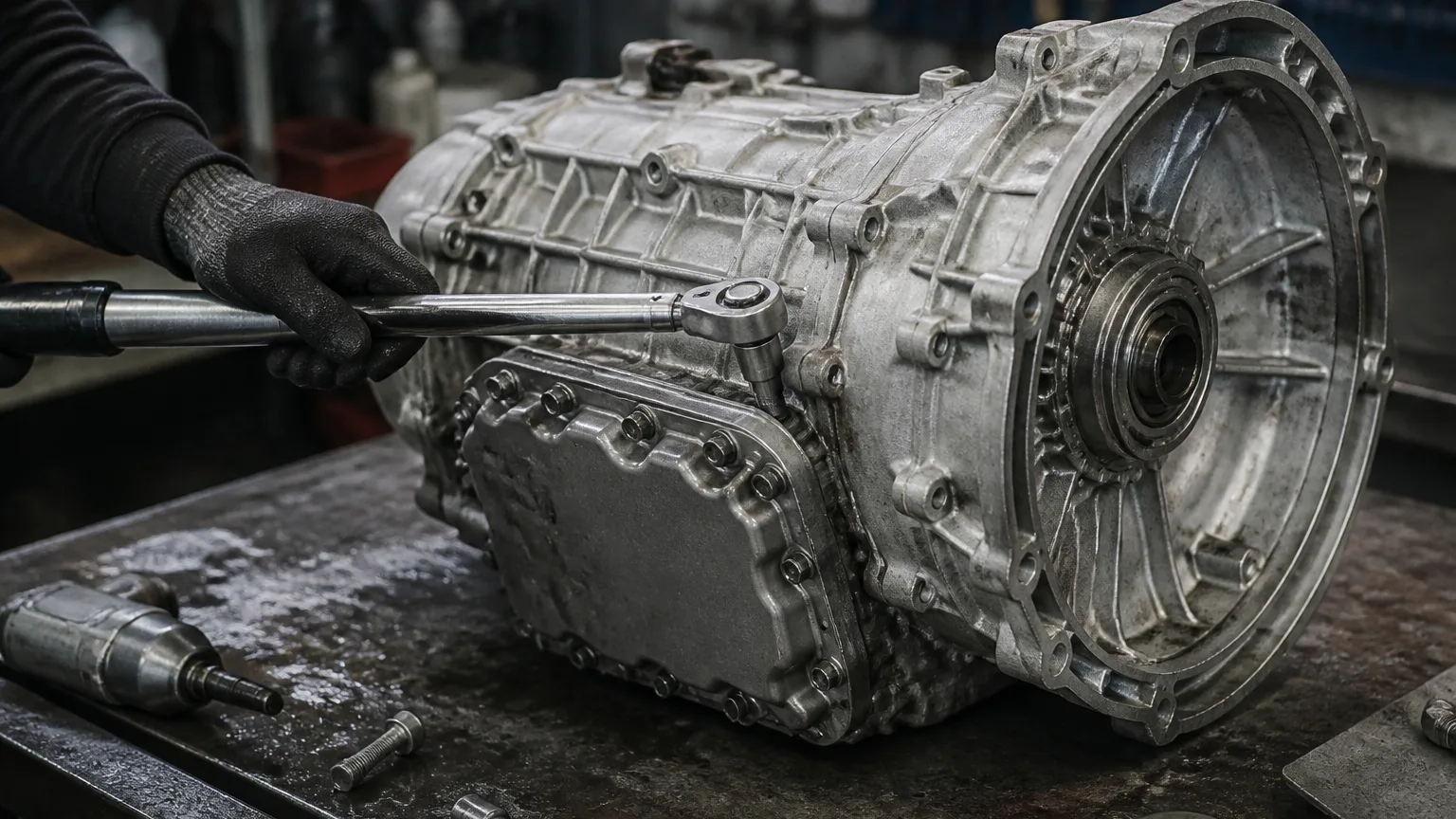
The Audi 4.2 V8 is one of the best-sounding engines Audi ever built, and when it's healthy it'll happily run past 200,000 miles. But there are two quite different 4.2 V8s out there, and they go wrong in different ways. Get them confused and you can easily buy a car with a five-figure repair waiting to happen. Here's the honest breakdown of what actually fails, why, roughly what it costs in the UK, and how to catch the bad ones before you hand over any money.
First, know which 4.2 you're looking at. The early 40-valve 4.2 (MPI, port injection) turned up in cars like the B6/B7 S4, early C5/C6 A6 and D3 A8. The later 4.2 FSI (32-valve, direct injection) powered the C6 A6, D3/D4 A8, B8 S5, B7 RS4, Q7, R8 and others from roughly 2006 to 2012. The FSI is the one that suffers carbon build-up and the dreaded rear-of-engine timing chain. Don't blur the two — the fixes and costs are wildly different. If you're still deciding which Audi V8 to take on, my buyer's guide to Audi engines walks through the same MPI-versus-FSI thinking across the range.
Looking for this part? Send us your Audi model and reg and UK Audi breakers who have it can quote you — free to enquire.
Timing chain and tensioner failure (the big one)
This is the issue that defines the 4.2 FSI's reputation. The timing chains sit at the back of the engine, against the bulkhead — not the front where you'd normally service them. Over time the plastic chain guides go brittle from heat and vibration, the tensioners weaken, and the chain develops slack. Left long enough it can jump a tooth, throw the cams out of time and, in the worst case, let valves meet pistons.
The classic warning sign is a rattle on cold start-up for a second or two before the oil pressure takes up the slack. Audi told a lot of owners that rattle was "normal" — on a high-mileage FSI, treat it as a chain warning until proven otherwise. You may also see misfire codes, rough running or limp mode if it's gone further.
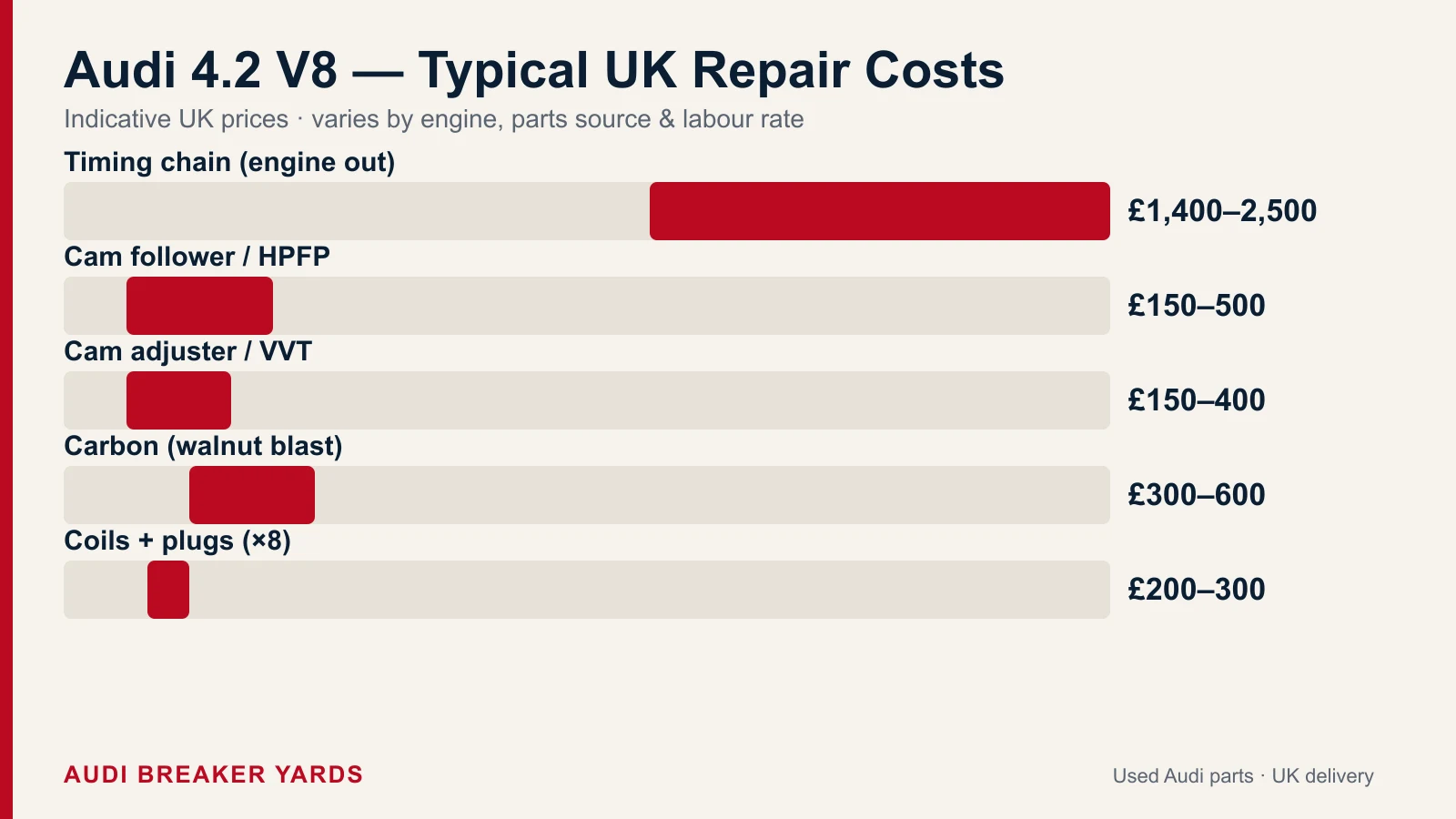
Because the chains are at the rear, this is an engine-out job — typically around 25 hours of labour. UK garage quotes for a full chain, guide and tensioner kit on the 4.2 generally land in the £1,400–£2,500 range, and dealer prices can be higher. If a car you're viewing has a documented chain kit done, that's a genuine plus worth paying for.
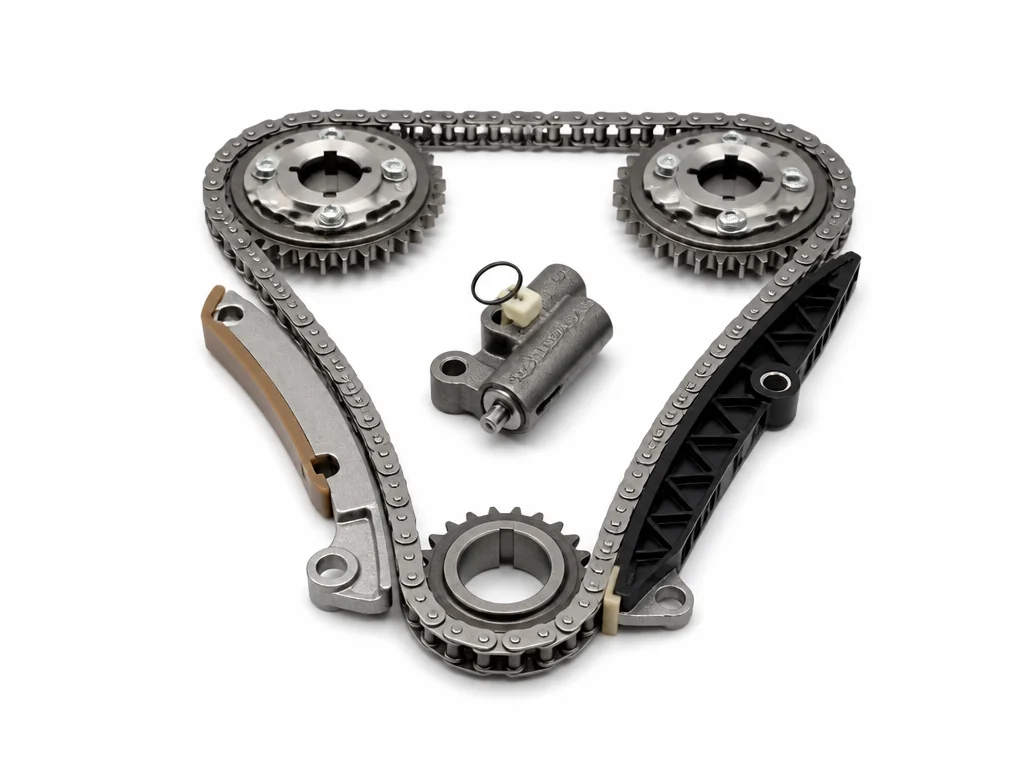
4.2 FSI timing chain kit
Timing components for the rear-mounted 4.2 FSI setup. Send us your engine code before you book the engine-out job and UK breakers who can match it will quote you.
Carbon build-up on the intake valves (FSI only)
Direct injection sprays fuel straight into the cylinder, so unlike an old port-injection engine, no petrol ever washes over the backs of the intake valves. Oil mist from the breather system bakes onto them instead, and over tens of thousands of miles it builds into hard carbon that chokes airflow.
Symptoms creep in slowly: rough idle, hesitation, a slight misfire, lumpy cold running and worse fuel economy. The proper fix is walnut shell blasting — the intake is removed and crushed walnut media is blasted through each port to scrub the valves clean without pulling the heads. Most specialists suggest doing it every 40,000–60,000 miles. In the UK expect roughly £300–£600 depending on access and how bad the deposits are. This only affects the FSI — the early 40-valve MPI engine doesn't suffer it.
Ignition coil and spark plug failure
All 4.2 V8s use a coil-on-plug per cylinder, sitting right down in the head where it cooks. Coils are a common wear item and one of the most frequent causes of a misfire and flashing engine light on these cars. The good news is it's cheap and DIY-friendly: a full set of eight coils and plugs runs around £200–£300 in used Audi parts and basic labour. Always replace coils as a set — fitting one and leaving seven tired ones just moves the misfire along.
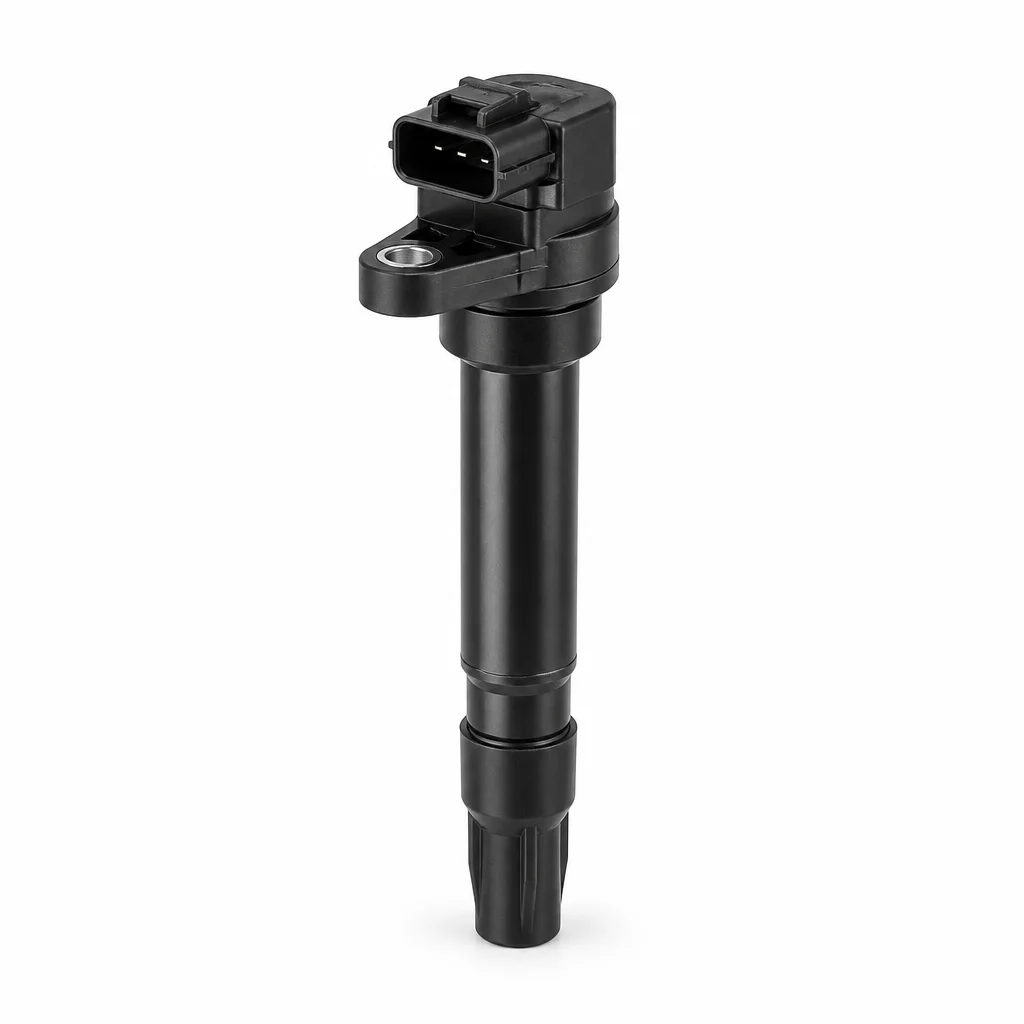
4.2 V8 ignition coil set
A matched set of eight coil packs to clear a persistent misfire in one go. Fitting them as a full set saves you chasing the fault around the engine cylinder by cylinder.
Cam follower and high-pressure fuel pump wear (FSI)
The FSI's high-pressure fuel pump is driven off a lobe on the camshaft via a follower. If that follower or the cam lobe wears, the pump can't make full pressure — you get fuel-rail pressure faults, hard starting, hesitation and limp mode. Caught early it's a follower and pump fix; ignored, a worn lobe can mean a camshaft. Check fuel-trim and rail-pressure live data on a test drive if you can.
Oil consumption, leaks and cam adjusters
Higher-mileage 4.2s can drink oil through worn valve stem seals and piston rings — anything much over a litre every 1,000 miles is a red flag worth investigating. These engines are also known for leaks: valve cover gaskets, the timing cover, oil cooler seals and rear main seals all weep with age. On the FSI, a leaking timing-cover coolant seal is the serious one because it can let coolant into the oil — check the dipstick for a mayonnaise-like emulsion. Worn cam adjusters / VVT solenoids also crop up, adding their own cold-start rattle and rough idle that's easy to mistake for the chain. The same heavy V8 in the Q7 throws up a very similar set of leaks and oil-burn issues, which I cover in more detail in my piece on common Audi Q7 engine problems.
Whatever the fault, used Audi engines and parts are usually far cheaper than chasing brand-new from a dealer, especially on these big V8s.
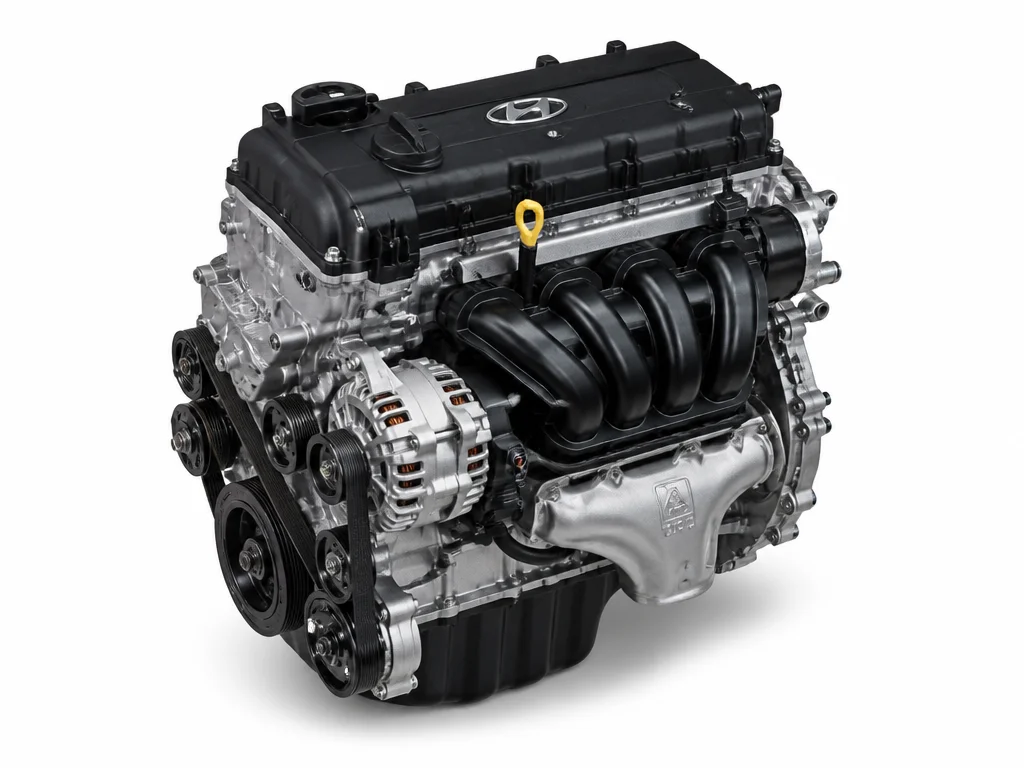
Complete used 4.2 V8 engine
When a chain job has been left too long, a low-mileage donor engine is often cheaper than a strip-down. Quote your exact engine code and UK breakers who have a match can quote you, with delivery options.
Quick reference: common 4.2 V8 problems and costs
| Problem | Mainly affects | Typical symptom | Indicative UK cost (not a quote) |
|---|---|---|---|
| Timing chain / tensioner | 4.2 FSI (chain at rear) | Cold-start rattle, misfire, limp mode | £1,400–£2,500 (engine out) |
| Carbon build-up on valves | 4.2 FSI | Rough idle, hesitation, poor economy | £300–£600 (walnut blast) |
| Ignition coils & plugs | All 4.2 V8 | Misfire, flashing engine light | £200–£300 (set of 8) |
| Cam follower / HPFP | 4.2 FSI | Fuel pressure fault, hard start | £150–£500+ |
| Oil consumption / leaks | Higher-mileage, all | Burning smell, low oil, mayo on cap | £100–£800+ depending on source |
| Cam adjuster / VVT solenoid | All 4.2 V8 | Cold rattle, rough idle, low-end power loss | £150–£400 |
How to catch a bad 4.2 before you buy
- Start it stone cold. Be there for the very first start of the day and listen for that top-end or rear rattle. A clean cold start is the single best sign on an FSI.
- Ask which engine it is. Confirm MPI 40-valve versus FSI 32-valve — it changes which problems apply and what a repair will cost.
- Check service history for a chain kit. On a high-mileage FSI a documented chain, guide and tensioner job is worth real money.
- Pull the oil cap and dipstick. Look for coolant emulsion and check the oil level and condition.
- Get a fault-code scan. Stored misfire, fuel-pressure or cam-timing codes tell you where to look.
Plenty of these cars are sound, especially well-kept FSI A6s and A8s whose owners service them religiously. The trick is buying with your eyes open and budgeting for the jobs above rather than being surprised by them.
Looking for this part? Send us your Audi model and reg and UK Audi breakers who have it can quote you — free to enquire.
Keeping a 4.2 V8 on the road
None of this should scare you off a 4.2 V8 — it's a brilliant engine when looked after. Frequent oil changes (every 5,000 miles, not the long-life intervals), proactive coil and plug renewal, and dealing with the chain on an FSI before it shouts at you will see one run for years. When you do need a part, whether it's a coil set, a follower for a tired HPFP, or a complete donor engine for a Q7, send us your reg and what's gone wrong and UK Audi breakers who have the part can quote you.
Sources
- There are two distinct 4.2 V8s — the early 40-valve MPI engine and the later 4.2 FSI 32-valve direct-injection engine, with the FSI suffering carbon build-up. differentcarreview.com, audizine.com
- The 4.2 timing chain sits at the rear of the engine, replacement is an engine-out job, guides go brittle and tensioners fail, costing roughly £1,400–£2,500 over ~25 hours. audizine.com, bumper.co
- The 4.2 FSI direct-injection design lets carbon build up on the intake valves, fixed by walnut blasting roughly every 40,000–60,000 miles. apexeuro.com, vwtuning.co
- Ignition coils sit in the head and run hot causing misfires, with a full eight-coil-plus-plug replacement around £200–£300; cam follower/HPFP wear, oil consumption, leaks and cam-adjuster/VVT wear are also documented. vwtuning.co, apexeuro.com