If your Audi A4 brake pedal slowly sinks toward the floor while you hold it at a red light, stop reading and book it in. That is one of the clearest signs of a failing master cylinder, and it is the kind of fault that does not get better on its own. Here is the honest breakdown of what the part does, how to spot a dying one, why they fail, what the replacement job actually involves, and roughly what it costs in the UK.
Looking for this part? Send us your Audi model and reg and UK Audi breakers who have it can quote you — free to enquire.
What the master cylinder actually does
The master cylinder is the heart of your hydraulic brake system. When you press the pedal, the booster amplifies that effort and the master cylinder converts it into hydraulic pressure, pushing brake fluid down the lines to the calipers at each wheel. No pressure, no braking. It is a simple-looking aluminium part bolted to the brake booster on the bulkhead, with the fluid reservoir sitting on top of it.
Inside are two pistons running in a polished bore, sealed by rubber cups. That twin-circuit design is a deliberate safety feature: if one circuit fails, the other still gives you partial braking. The catch is that those internal seals are exactly what wears out, and when they go the failure can hide in plain sight.
Signs your A4 master cylinder is on the way out
Master cylinder failure is usually gradual, which is why owners often ignore it until it gets frightening. Watch for these:
- A pedal that slowly sinks to the floor. The classic one. You press the brake, it holds for a second, then creeps down over 5 to 15 seconds even though you are pushing steadily. At a junction the car can start to creep forward as pressure bleeds away.
- A spongy or inconsistent pedal. Braking feels soft one moment and firmer the next, with no obvious pattern.
- The brake warning light. A low-fluid or pressure fault often trips the dash warning. Never dismiss a brake light on an A4.
- Fluid loss with no visible leak. This is the giveaway. The reservoir keeps dropping but there is nothing on the driveway and no wet caliper or pipe. The fluid is bypassing the internal piston seals and circulating back into the reservoir instead of holding pressure.
- Slightly longer stopping distances. The car takes more road to pull up than it used to.
There is a quick test you can do yourself. With the engine off, pump the pedal until it goes hard, then hold firm pressure and start the engine. The pedal should drop a little and then stay put. If it sinks steadily toward the floor under your foot, the master cylinder is bypassing internally and needs replacing. The B8-generation A4 is one of the cars where this sinking-pedal complaint turns up often, and I cover the wider picture in my rundown of common Audi A4 B8 problems.
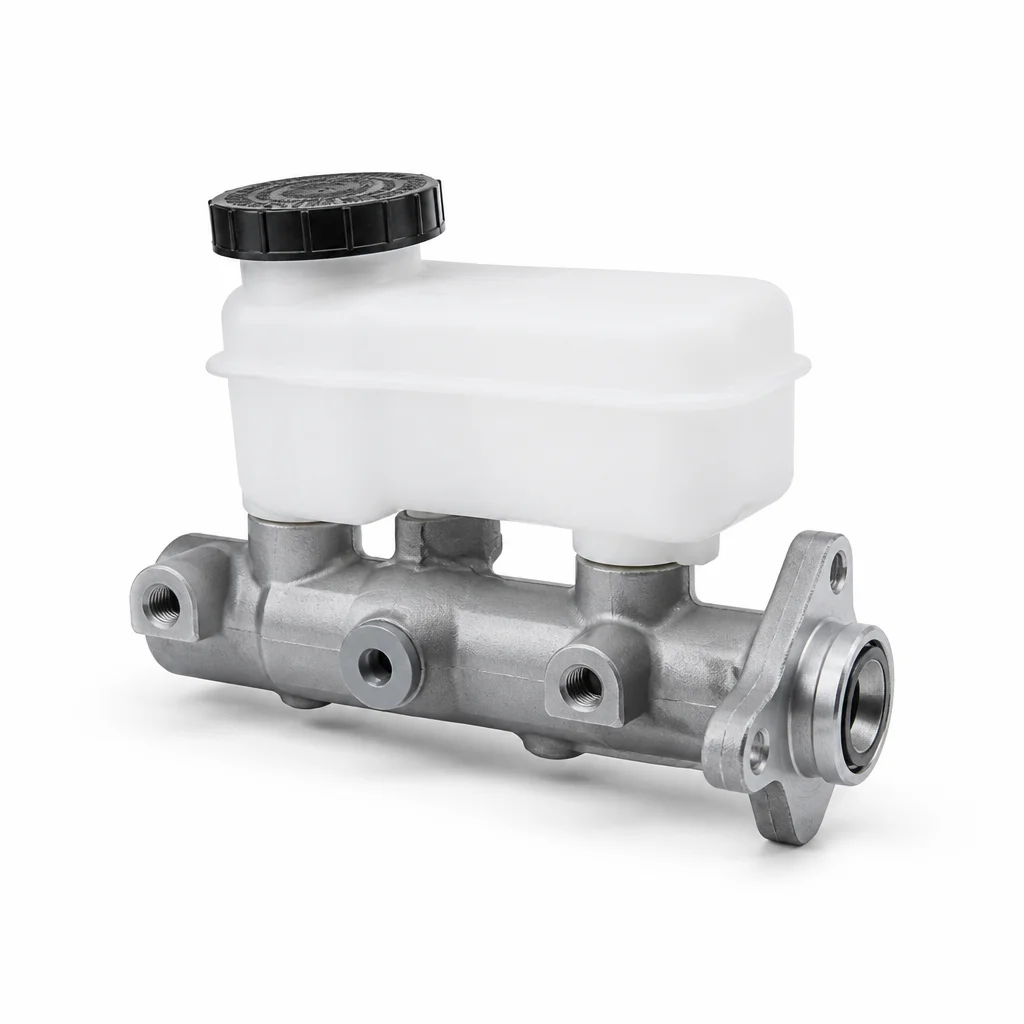
Audi A4 brake master cylinder
Master cylinders matched to your exact A4 generation and engine code. Send us your reg before you book the job and UK breakers who have the right part can quote you.
Why master cylinders fail
The number one cause is old brake fluid. Brake fluid is hygroscopic, meaning it draws moisture out of the air over time. That water lowers the fluid's boiling point and, worse, corrodes the inside of the master cylinder bore. Once the polished bore develops rust pits, the rubber seals can no longer hold pressure against the rough surface, so fluid slips past them. That is your internal bypass.
This is why the two-yearly brake fluid change in the Audi service schedule matters far more than people realise. Skip it for years and you are aging the master cylinder, the ABS unit and every caliper at once. General wear, age-hardened seals and contamination all play a part too, but moisture in neglected fluid is the big one. If you want the full maintenance picture, my Audi service and maintenance guide goes through the intervals that keep brakes healthy.
The replacement job: remove, fit and bleed
Swapping the master cylinder on an A4 is not a heavy mechanical job, but it is fiddly because of the tight space against the bulkhead. In rough order:
- Empty the reservoir and disconnect the fluid-level sensor.
- Disconnect the brake lines from the old cylinder, plugging them to limit fluid loss and air ingress.
- Unbolt the master cylinder from the booster and ease it out.
- Bench-bleed the new cylinder before fitting, then bolt it on, reconnect the lines and the sensor.
- Bleed the whole system and refill with the correct fluid.
That last step is the one people underestimate. Your A4 has ABS, and a normal pedal-pump bleed will not clear air trapped inside the ABS hydraulic unit. To do the job properly you need a diagnostic scan tool (VCDS or equivalent) to put the ABS module into bleed mode, cycling its internal solenoids and pump so the trapped air can be flushed out to the calipers. Skip that and the pedal can stay spongy no matter how much you bleed at the wheels.
On fluid, the A4 uses a DOT 4 specification brake fluid (check your handbook or reservoir cap for the exact grade). Always use fresh, sealed fluid, because an open bottle has already started absorbing moisture. Allow around three hours for the whole job including the bleed if you are doing it yourself.
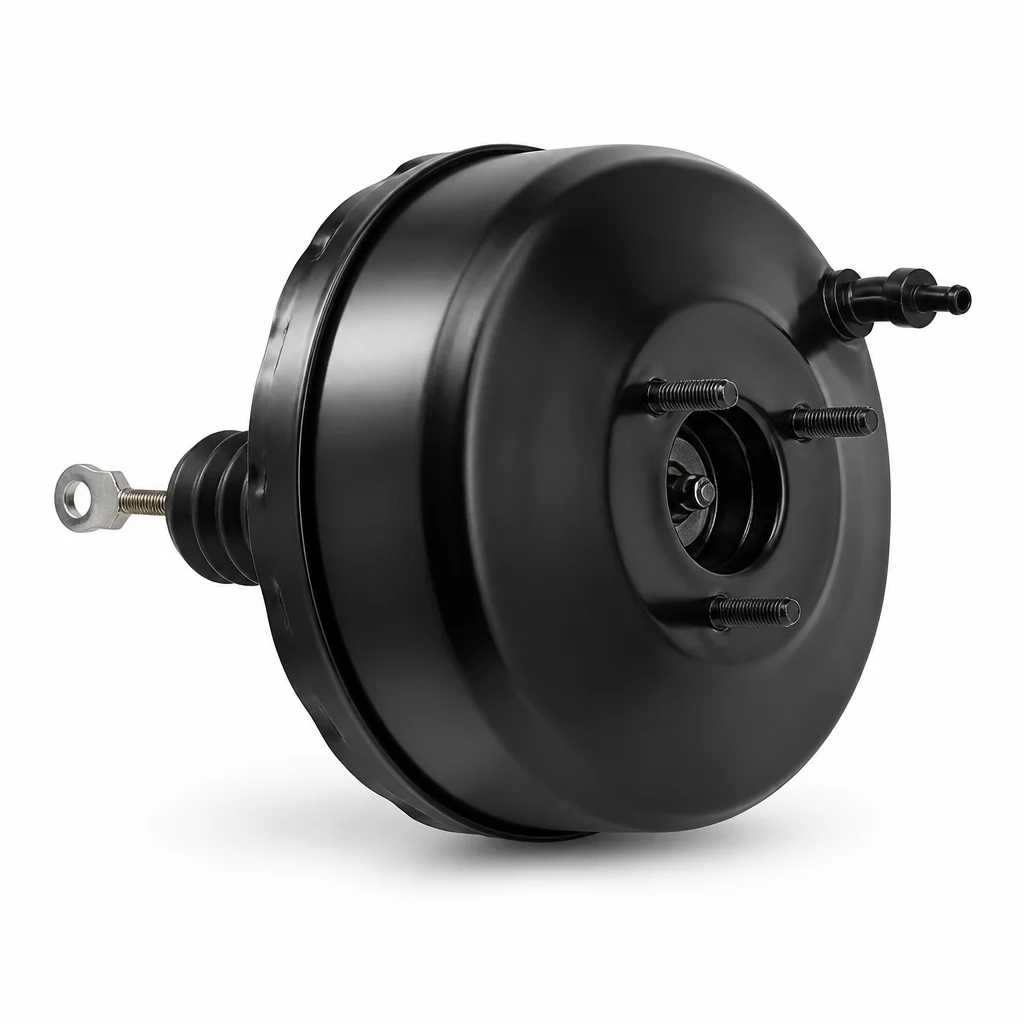
Audi A4 brake booster
The booster sits right behind the master cylinder and often tires at the same age. If a hard pedal points at the servo, you can request a booster alongside your cylinder.
What it costs in the UK
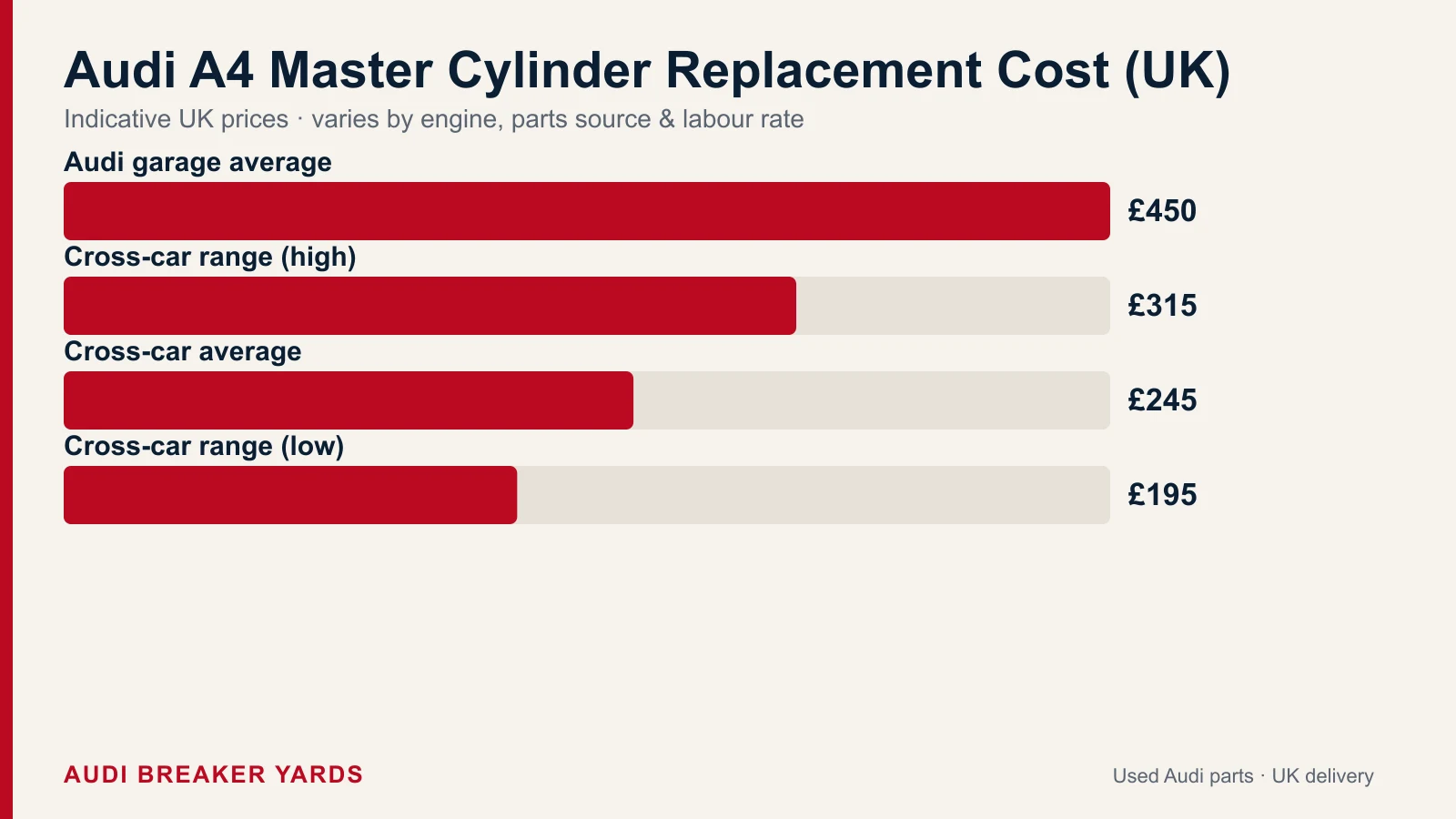
A garage master cylinder replacement on an A4 is more expensive than on a budget hatchback, both because the part costs more and because the ABS bleed needs a scan tool. Across all cars the UK average sits around £245, but premium German cars run higher. Audi specifically averages around £450 at a garage once parts, labour and the bleed are factored in. Labour itself is usually 1 to 2 hours, but the proper ABS bleed adds time.
If you do the work yourself, the part is where the saving is. A used Audi A4 master cylinder costs a fraction of a new dealer unit, and you can pair it with a couple of litres of fresh DOT 4 fluid. The main thing you still need is access to a scan tool for the ABS bleed, whether that's your own VCDS cable or a quick visit to someone who has one.
While the brakes are apart it's worth checking the discs and pads, because a master cylinder fault often surfaces alongside other tired braking parts on a high-mileage A4.
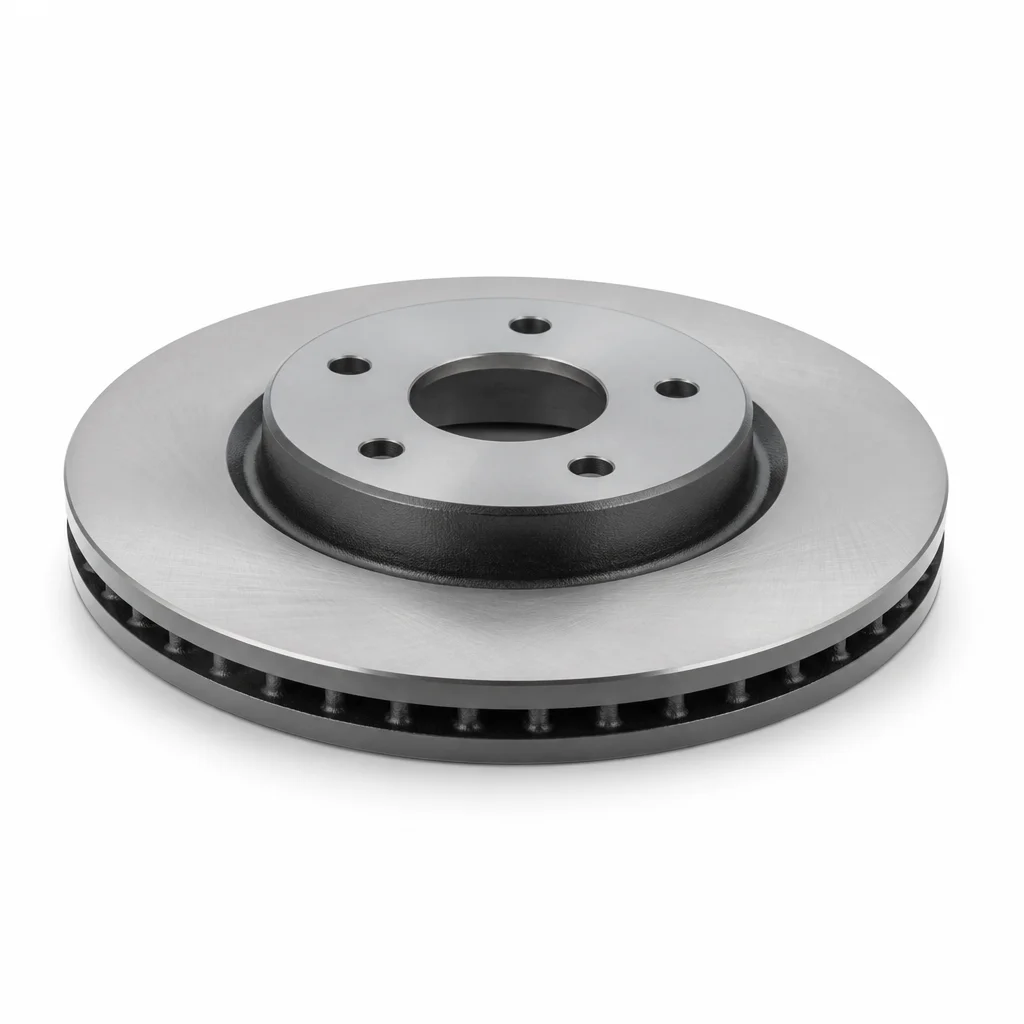
Audi A4 brake discs and rotors
If the discs are scored or worn while you're in there, refresh them at the same time so the whole front end stops evenly.
Quick reference: symptoms, causes and costs
| What you notice | Likely cause | Indicative UK cost (not a quote) |
|---|---|---|
| Pedal slowly sinks to the floor | Internal seal bypass in the cylinder | Replace cylinder, ~£450 garage (Audi avg) |
| Fluid drops with no visible leak | Fluid bypassing piston seals internally | Replace cylinder (as above) |
| Spongy / inconsistent pedal | Worn seals or air in ABS unit | Cylinder + proper ABS bleed |
| Brake warning light on | Low fluid or pressure fault | Diagnose before driving |
| Part only (DIY route) | Used master cylinder | Far below new dealer price |
| Labour at a garage | 1–2 hrs + ABS bleed time | £35–£100/hr by area |
Safety: do not drive a car with a failing master cylinder
This is the part I will not soften. A sinking or spongy brake pedal means your braking can partially or fully disappear without warning, usually at the worst possible moment. The twin-circuit design might leave you some braking if one half fails, but you cannot rely on that, and a cold, damp morning is exactly when a marginal cylinder lets go. If your A4 has a sinking pedal, fluid that keeps dropping, or a brake warning light, treat it as off-the-road until it is fixed. It is genuinely not worth the risk.
Looking for this part? Send us your Audi model and reg and UK Audi breakers who have it can quote you — free to enquire.
Getting your A4 stopping properly again
A master cylinder is a fixable fault, not a write-off. Catch the sinking pedal early, fit a sound replacement, do the ABS bleed properly with a scan tool, and refill with fresh DOT 4, and your A4 will stop like it should again. The job is well within a competent DIYer's reach with the right kit, or an afternoon at a garage. When you need the part, you can request Audi A4 spares and wider braking parts through us. Send us your reg and what the pedal's doing, and UK breakers who have the right cylinder can quote you.
Sources
- A failing master cylinder typically shows a brake pedal that slowly sinks to the floor, a spongy pedal, the brake warning light, and reduced braking power; never drive with a sinking pedal. thecarbuzz.com
- Fluid loss with no external leak is caused by fluid bypassing the internal piston seals back into the reservoir; the engine-off pump test (hold pedal, start engine, watch it sink) confirms internal bypass. 700r4transmissionhq.com, thecarbuzz.com
- The main cause is moisture in old brake fluid corroding the cylinder bore so the seals can no longer hold pressure. 700r4transmissionhq.com
- Replacing the A4 master cylinder takes around three hours including bleeding, uses DOT 4 fluid, and needs a scan tool to put the ABS into bleed mode to flush trapped air. justanswer.com, xtoolonline.com
- UK master cylinder replacement averages about £245 across all cars (range £195–£315) but around £450 for Audi, with 1–2 hours' labour. clickmechanic.com, autobutler.co.uk