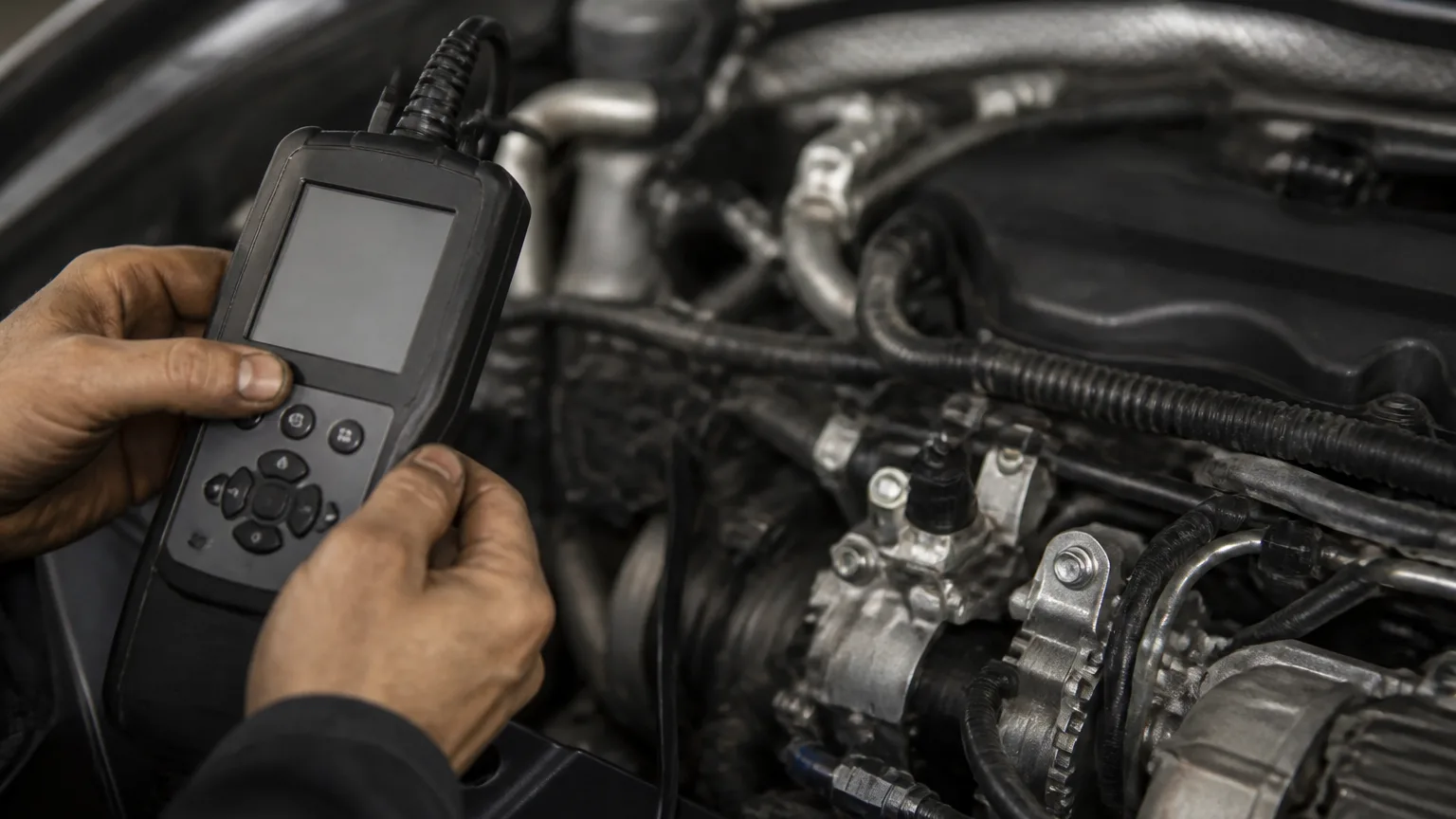
If your Audi or VW has thrown a P0016 and it's hard to start, running rough, or rattling on a cold morning, stop and read this before you drive it anywhere. Let me be straight with you: P0016 reads as "Crankshaft Position – Camshaft Position Correlation (Bank 1 Sensor A)", which is the ECU telling you the camshaft and crankshaft timing no longer agree. On VAG engines that's most often a mechanical timing problem, not a quick sensor swap, and it's one of the few fault codes where I'd genuinely tell you to switch the engine off and get it on a trailer.
Looking for this part? Send us your Audi model and reg and UK Audi breakers who have it can quote you — free to enquire.
What P0016 actually means on an Audi or VW
Your engine control module watches two signals: the crankshaft position sensor (VW's G28) and the camshaft position sensor (G40). It knows exactly where each one should sit relative to the other. When the gap between them drifts outside the factory window, the ECU logs P0016 because the cam and crank are, in plain terms, out of sync.
That correlation matters because it controls valve timing. If the cam is even a few teeth out from the crank, the valves open and close at the wrong moment relative to the pistons. On the EA888 2.0 TFSI and TSI petrols (A4, A5, A6, Q5, TT and the VW/SEAT/Škoda equivalents), the usual root cause is a stretched timing chain or a failed chain tensioner letting the chain slip a tooth. It's not exclusive to those engines.
The symptoms you'll notice
P0016 rarely shows up politely. The classic signs are:
- A rattle on start-up — the infamous VW "death rattle" as a slack chain whips against the guides before oil pressure builds.
- Hard starting, long cranking, or in bad cases a no-start.
- Rough running and misfires as the valve timing falls out of step.
- Lost power and limp mode — the ECU pulls timing and boost to protect the engine.
- Poorer fuel economy and the engine warning light, obviously.
That cold-start rattle is the one to act on fast. It usually means the tensioner has worn and is no longer holding the chain taut, so the chain has the slack to jump. If yours sounds like a handful of marbles for a second or two on a cold morning, treat it as urgent. A jumped chain on these interference engines can bend valves and clout pistons in one bad start.
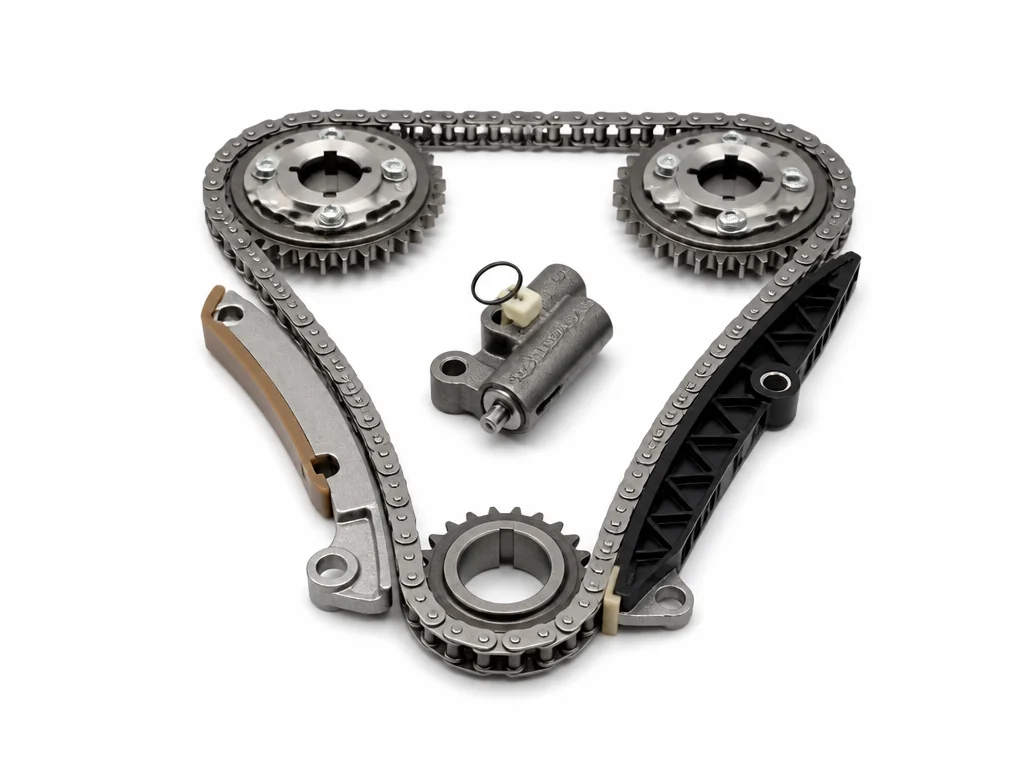
Audi Timing Chains & Tensioners
A stretched chain or worn tensioner is a common cause of P0016 on EA888 engines. Send us your engine code and UK breakers who have matching timing components can quote you.
The real common causes on VAG engines
Here's the honest shortlist. Don't let anyone sell you the cheap part first if the symptoms point at the expensive one:
- Stretched timing chain — high-mileage chains elongate, the cam falls behind the crank, and the correlation drifts out of spec. Common on EA888 petrols.
- Failed chain tensioner and worn guides — the original tensioners are weak. When the ratchet wears, the chain goes slack at rest and can slip on the next start.
- Faulty camshaft adjuster or VVT solenoid (oil control valve) — a sticking variable-valve-timing actuator or a clogged spool valve can shift the cam out of position even with a healthy chain.
- Low or dirty oil — the adjusters and tensioner are oil-fed. Old, sludgy or low oil starves them and mimics a timing fault.
- Camshaft or crankshaft position sensor — a faulty sensor or a slipped/cracked tone (reluctor) ring feeds the ECU a bad reading.
- Damaged wiring or a corroded connector at either sensor — less common, but cheap to rule out first.
How P0016 is diagnosed step by step
There's no point gambling on parts with this one. The sensible order is:
- Scan with a VAG-capable tool (VCDS or OBDeleven) and read the freeze-frame data. Note any sibling codes like a knock-sensor or cam-adjuster fault sitting alongside it.
- Check the oil first — level and condition. Low or filthy oil is a five-minute check that can save a misdiagnosis.
- Test the cam and crank sensors and inspect their plugs and wiring for damage or corrosion. Rule out the cheap causes before tearing into the chain.
- Check the camshaft adjuster and oil control valve operation as the manual describes, since a sticking VVT actuator can throw this code on its own.
- Verify the timing mechanically — count the chain roller links between the cam sprockets and check the chain for stretch against spec. This is the test that confirms or clears the big job.
If the sensors, wiring and oil all check out, the trouble is mechanical and you're into the timing case. A drifting cam/crank relationship can also bring its sibling correlation codes along for the ride, so if you're seeing a crank-signal fault thrown in too, my write-up on the P0322 engine-speed code is worth a look to keep the two straight.
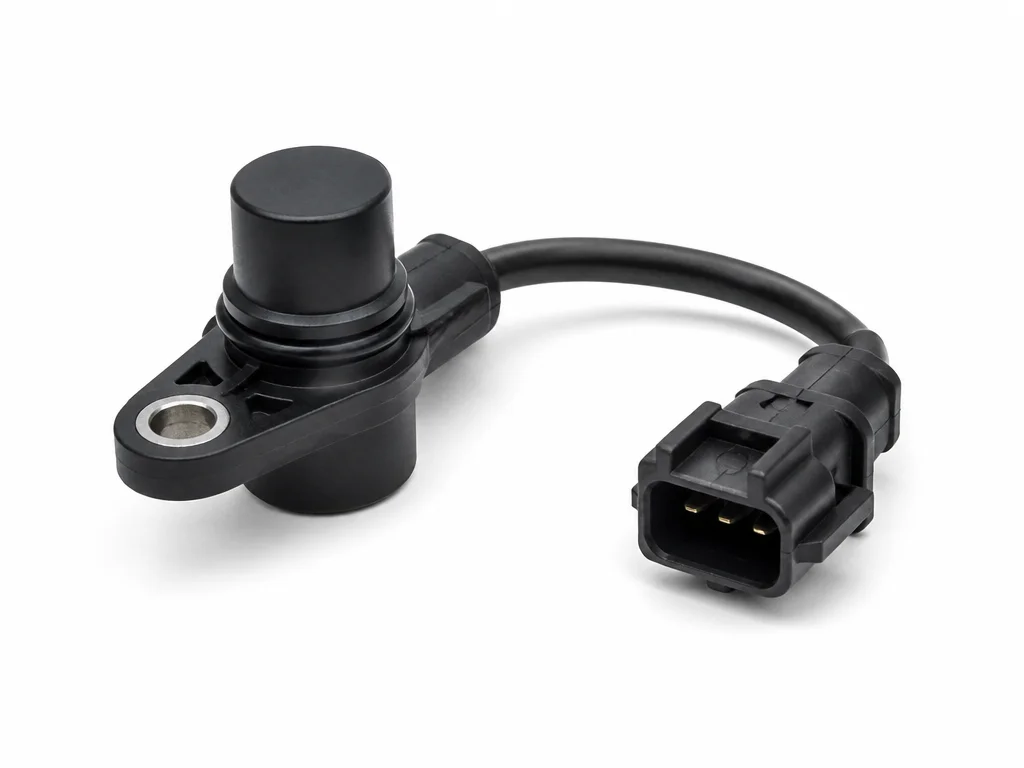
Cam & Crank Position Sensors
When P0016 turns out to be a tired sensor rather than the chain, a used G40 or G28 clears it for a fraction of the timing-job price. Ask the supplying breaker whether the donor engine was running.
How it gets fixed
The fix depends entirely on what the diagnosis turns up. If it's a sensor, a connector or low oil, you're into the cheap end: swap the part or top up and reset, job done. If a clogged oil control valve is sticking the cam adjuster, cleaning or replacing that solenoid often clears it without opening the timing case.
But if the chain has stretched or a tensioner has let it slip, that's the big job. The timing cover comes off, the chain, tensioner and guides are replaced as a set, and the cam timing is set back to spec. That's where the labour bill lives. If the chain has already jumped and bent valves, you're into a head rebuild on top, and at that point it's often cheaper to look at a used engine than to keep throwing money at the old one. The same EA888 chain and component pattern shows up across the A4 range too, so parts cross over neatly.
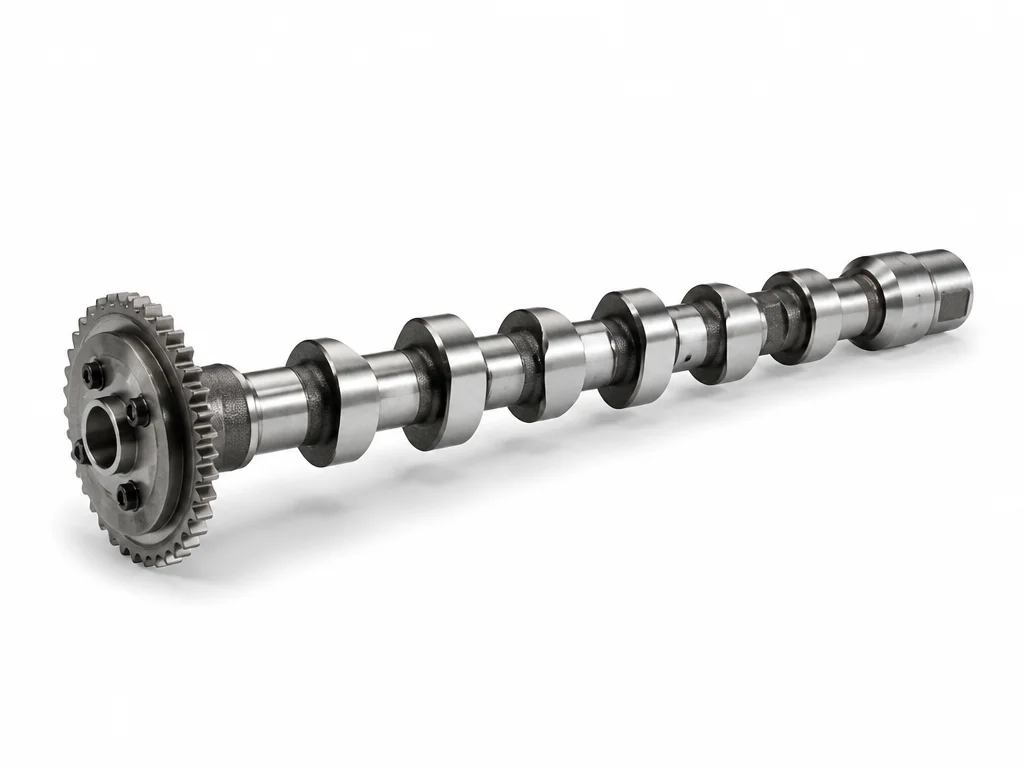
Camshafts & Cam Adjusters
If a worn cam adjuster or a damaged camshaft is behind the correlation fault, a used assembly matched to your engine code can put the timing back where it should be.
What P0016 should cost to fix in the UK
This is the code where the bill swings wildly, because the cause sets the price. A sensor is pocket money; a slipped chain that's bent valves runs into four figures. Indicative ranges only, not quotes; prices vary by condition, mileage, supplier and labour rate.
| Cause / repair | Indicative cost (£) | Notes |
|---|---|---|
| Diagnostic / fault read | £0–£100 | Flat diagnostic fee; some garages waive it if you have the work done. |
| Camshaft / crankshaft sensor | £85–£200 | Cam sensor avg ~£120; cheapest outcome. |
| Oil control valve / VVT solenoid | £120–£300 | If a sticking spool valve is shifting the cam. |
| Timing chain tensioner (supplied & fitted) | £250–£300 | Independent garage, tensioner only. |
| Full timing chain + tensioner + guides | £600–£1,300 | The big one. Most of it is labour (4–8 hrs). |
| Chain jumped + valve damage | £1,500+ | Head rebuild or replacement engine territory. |
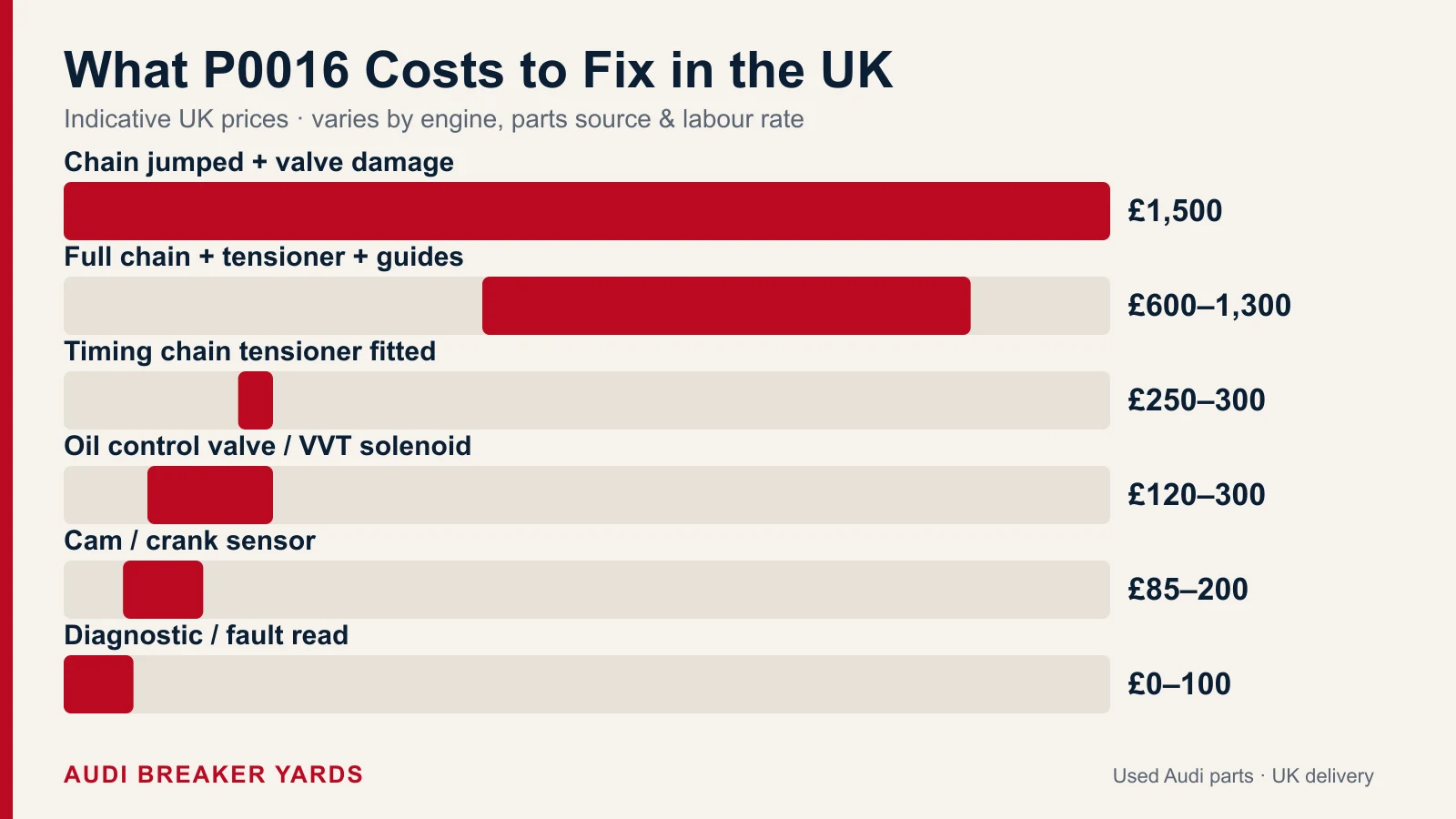
A used chain set, tensioner or sensor from a donor engine trims the parts side of every line above, which matters most on the timing job where labour does the real damage. If you'd rather not pour timing-chain money into a high-mileage engine, it's worth reading how these failures snowball before you decide. My rundown of common Audi V8 engine problems covers the same chain-and-tensioner story on the bigger engines.
Looking for this part? Send us your Audi model and reg and UK Audi breakers who have it can quote you — free to enquire.
Is it safe to keep driving with P0016?
No, and I mean that plainly. P0016 is rated a severe fault for a reason: the cam and crank are out of step, and on an interference engine that's a direct risk of valves meeting pistons. If the chain jumps on your next start, you can turn a £700 timing job into a £2,000+ engine. If yours is rattling, hard-starting or in limp mode, don't run it. Get it diagnosed and recovered rather than driven. The cost of a tow is nothing next to the cost of a wrecked engine.
The bottom line
P0016 on an Audi or VW means the cam and crank timing no longer agree, and on VAG engines the usual villain is a stretched chain or a worn tensioner rather than a simple sensor. Diagnose properly: check the oil and sensors first, then verify the chain. If it's a sensor or solenoid, you're lucky and it's cheap; if it's the chain, do it as a full set and don't drive it in the meantime. Send us your model and engine code and UK breakers who have timing parts, sensors or a complete engine for it can quote you.
Sources
- P0016 means "Crankshaft Position – Camshaft Position Correlation (Bank 1 Sensor A)," referencing the G28 crankshaft and G40 camshaft signals, with causes including timing belt/chain alignment and camshaft adjuster (VVT) faults. ross-tech.com
- On VW/Audi the common causes are a stretched timing chain or jumped teeth, a worn tensioner, slipped tone rings, low or dirty oil, a clogged oil control valve, and faulty cam/crank sensors; symptoms include hard starting, rough running and the "VW death rattle." vwtuning.co, obd-codes.com
- Early EA888 engines are prone to timing chain failure; the tensioner works under oil pressure and neglected maintenance can cause premature wear or sudden failure, and high-mileage engines can suffer chain stretch. parkers.co.uk
- UK costs: camshaft sensor replacement averages ~£120 (£85–£175); a timing chain tensioner fitted is around £250–£300; a full timing chain replacement runs roughly £600–£1,300, with severe slipped-chain damage costing far more. clickmechanic.com, rac.co.uk
- P0016 is a severe fault: the engine may be very hard or impossible to start and runs extremely rough, with risk of extensive engine damage if a stretched chain or worn belt is ignored, so the car should not be driven. vwtuning.co, icarsoft.com