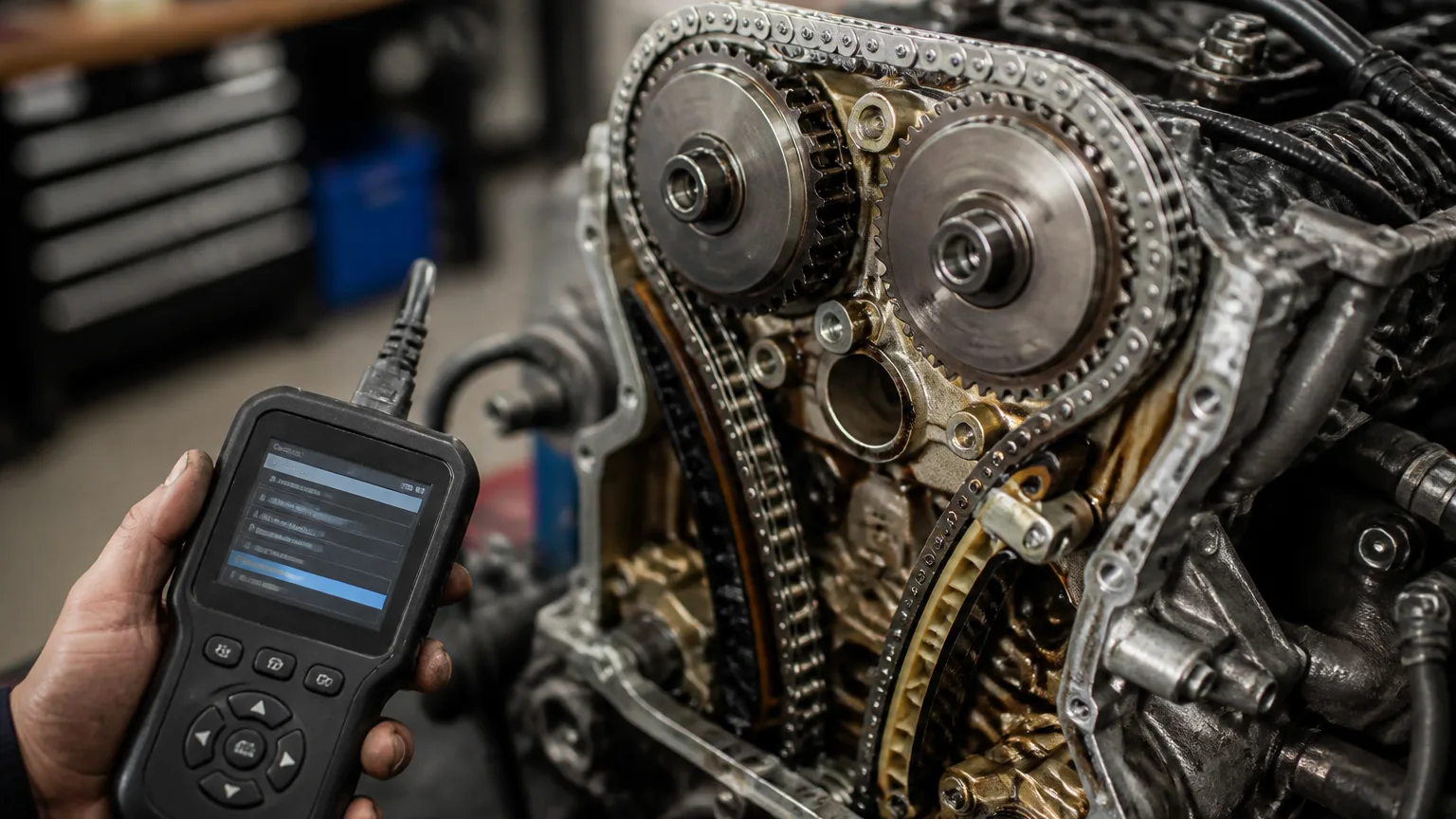
If you've just pulled a P0322 off your Audi or VW and the car's either refusing to start, cutting out, or the rev counter has gone dead, you're in the right place. Let me cut through the noise. P0322 reads as "Ignition/Distributor Engine Speed Input Circuit – No Signal", and on VAG cars (that's Audi, VW, SEAT and Škoda) it almost always points at one thing: the engine speed signal from the crankshaft has gone missing. The good news is it's usually a cheap part. The bad news is you really shouldn't ignore it.
Looking for this part? Send us your Audi model and reg and UK Audi breakers who have it can quote you — free to enquire.
What P0322 actually means on an Audi or VW
Your engine control module (the ECU) needs to know exactly where the crankshaft is and how fast it's spinning so it can fire the injectors and spark at the right moment. On VAG engines that job falls to the Engine Speed Sensor (VW's part code G28), which doubles as the crankshaft position reference. When the ECU stops receiving a usable signal from that circuit, it logs P0322 and, on a lot of cars, simply refuses to run the engine to protect it.
So although the generic wording mentions an "ignition/distributor" circuit (a hangover from older engine designs), on a modern Audi or VW this is a crankshaft / engine-speed signal fault, plain and simple. Higher-mileage four-cylinder cars are the usual customers, because the sensor lives down by the engine in a hot, dirty spot and the heat eventually cooks the internals.
The symptoms you'll notice
P0322 rarely shows up quietly. The classic signs are:
- Engine won't start — it cranks over fine but never fires, because the ECU has no crank signal to time the injection off.
- Stalling or cutting out — runs, then dies, often when hot. An intermittent sensor is a nightmare for this.
- Dead rev counter — the tachometer needle stays at zero or jumps about, because it reads off the same signal.
- Misfires, stuttering and lost power under acceleration.
- Flashing glow-plug light on diesels — a common VAG tell-tale that sits alongside this code.
- The engine warning light, obviously.
One thing worth saying about the misfire side of it: a healthy crank signal is what lets the ECU fire each coil at the right instant, so a flaky one can mimic — or sit alongside — a genuine ignition fault. If you've already swapped or suspected coils and the rough running won't clear, the crank sensor is the next stop. And if you're seeing a turbo-related code thrown into the mix, it's worth reading up on the P0299 underboost code too, because a stalling, mistimed engine can drag boost readings down with it.
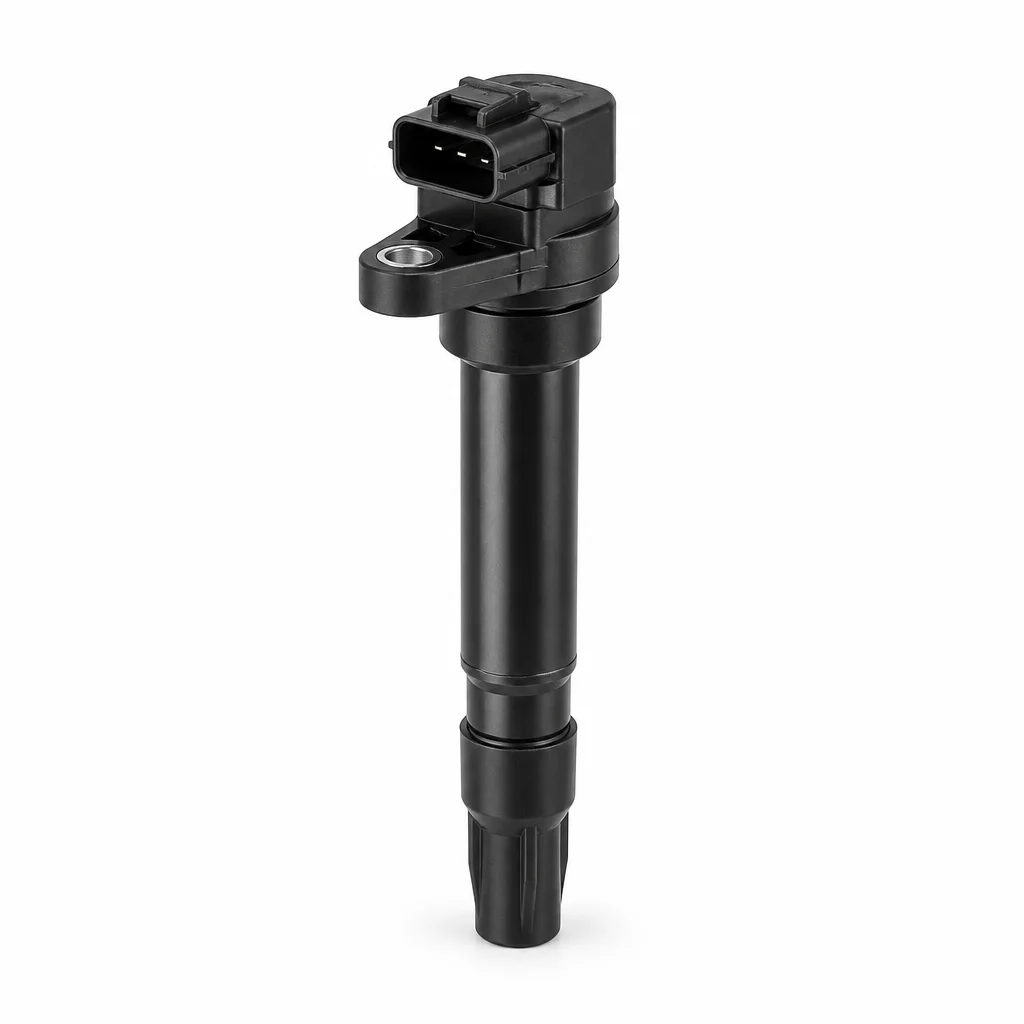
Audi Ignition Coil Packs
If the misfires turn out to be coils rather than the crank sensor, a used coil pack can clear the rough running for a fraction of dealer money. Send us your engine code and UK breakers who have a matching coil pack can quote you.
The real common causes
The most common cause is the sensor itself. But it's worth knowing the full shortlist before anyone sells you a part you don't need:
- Failed crankshaft/engine-speed sensor (G28) — by far the most common cause. They die internally from heat and age.
- Loose or unseated sensor — if the car's recently been worked on, the sensor may not be clipped home or torqued properly.
- Damaged wiring or a corroded connector — the plug sits in a harsh spot and can suffer from oil or coolant contamination, chafing, or a broken pin.
- Reluctor / trigger wheel damage — rare, but a chipped or shifted tone ring on the crank will upset the signal.
- Camshaft position sensor — occasionally implicated because the ECU cross-checks cam and crank signals.
How to diagnose P0322 step by step
There's no point throwing parts at it. Here's the sensible order:
- Read the freeze-frame data with a proper VAG-capable scanner (VCDS/OBDeleven is ideal). Note whether the fault is "no signal" and whether it's stored or intermittent.
- Eyeball the sensor and its plug — check it's clipped in, the connector's clean and dry, and there's no oil weeping into it.
- Inspect the wiring from the sensor back toward the ECU for chafe points, melted insulation or a green/corroded pin.
- Check live data — crank the engine and watch the RPM/engine-speed value. If it stays at zero while cranking, the signal genuinely isn't getting through.
- Test the sensor with a multimeter (resistance and reference voltage) against spec, or simply swap in a known-good unit.
- Confirm the trigger wheel is intact if the sensor and wiring both check out.
If the sensor and its loom both check out but the signal still drops, the trouble is back toward the control module — and that's a far rarer (and pricier) outcome. A wonky reference can also throw correlated codes, so don't be surprised to see a timing fault like the P0016 cam/crank correlation code alongside it when the two signals stop agreeing.
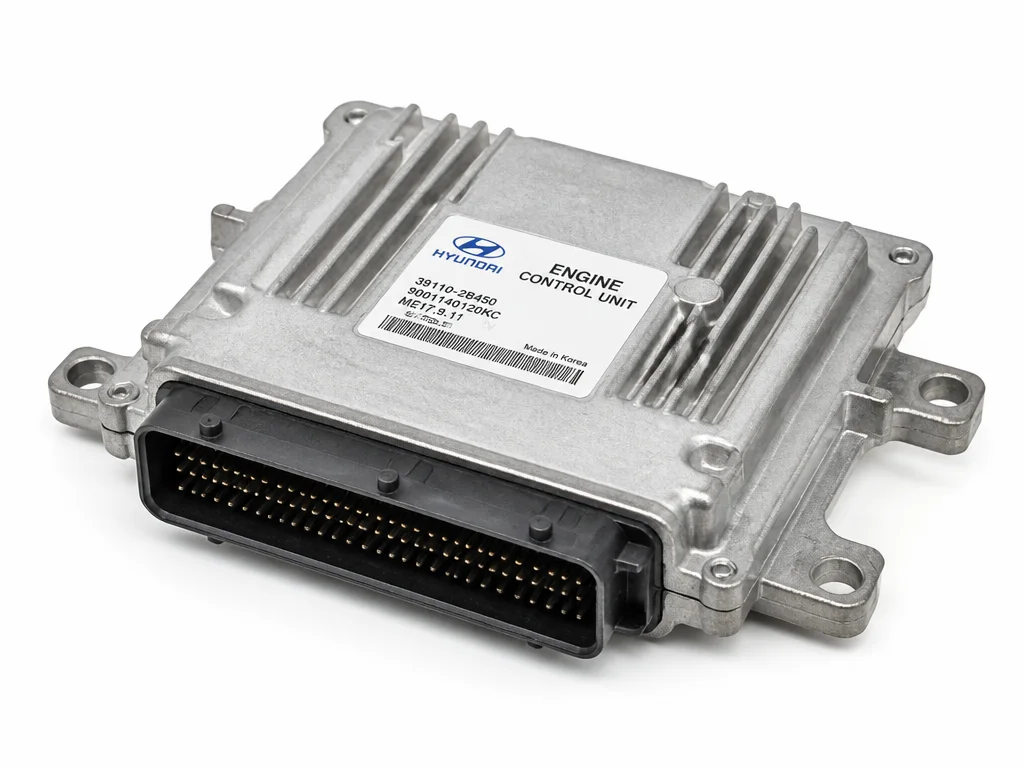
Audi Engine ECU / Control Modules
In the rare cases where the sensor and wiring are sound but the signal still won't reach the module, a replacement ECU matched by part number may be needed. Check the coding requirements for your car before you buy.
How it gets fixed
In the vast majority of cases the fix is a new engine-speed/crankshaft sensor, clear the code, and the car's away. It's an intermediate DIY job on most VAG engines (a couple of bolts and a connector), but access varies wildly. On some 2.0 TDI and TFSI units it's tucked behind the engine or under the intake, which is where the labour time creeps up. If the wiring or connector is the culprit, a repair or pigtail splice sorts it. If you're fitting a replacement sensor yourself and your old one has fried its loom, it's worth grabbing the matching connector at the same time — you can request used Audi A4 parts and sensors through us, and the same goes for the A3 range.
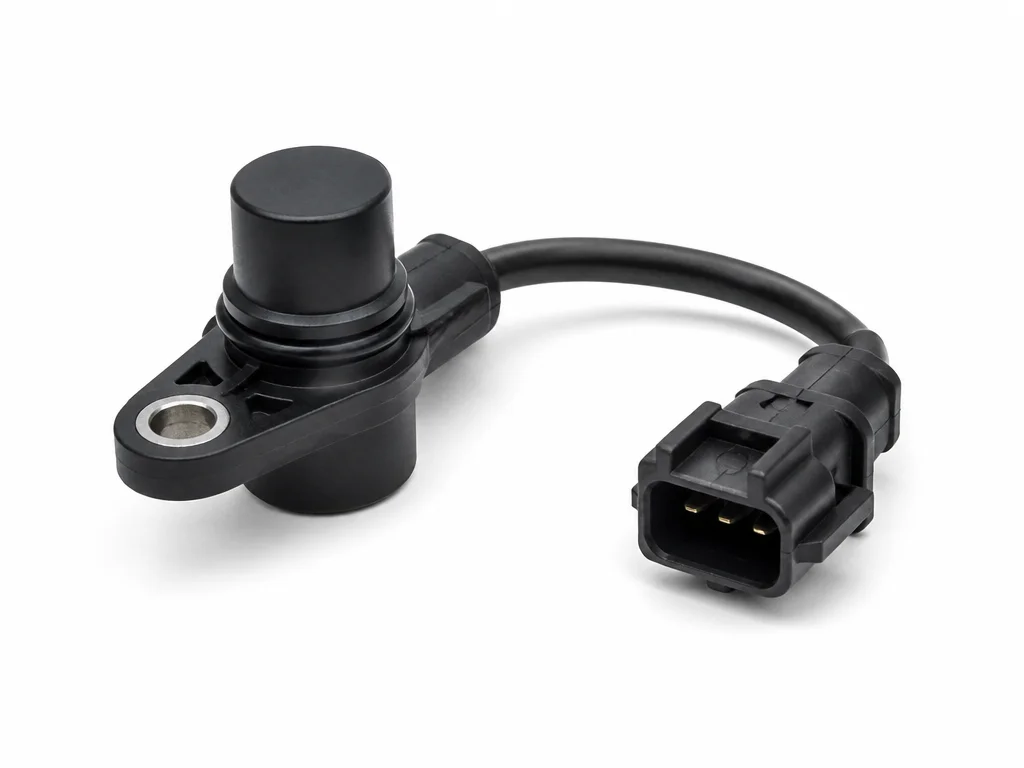
Crankshaft / Engine-Speed Sensors (G28)
This is the part that fixes most P0322 faults. Ask the supplying breaker whether the donor engine was running when it was removed — a used sensor makes most sense on engines where labour, not the part, is the real cost.
What it should cost in the UK
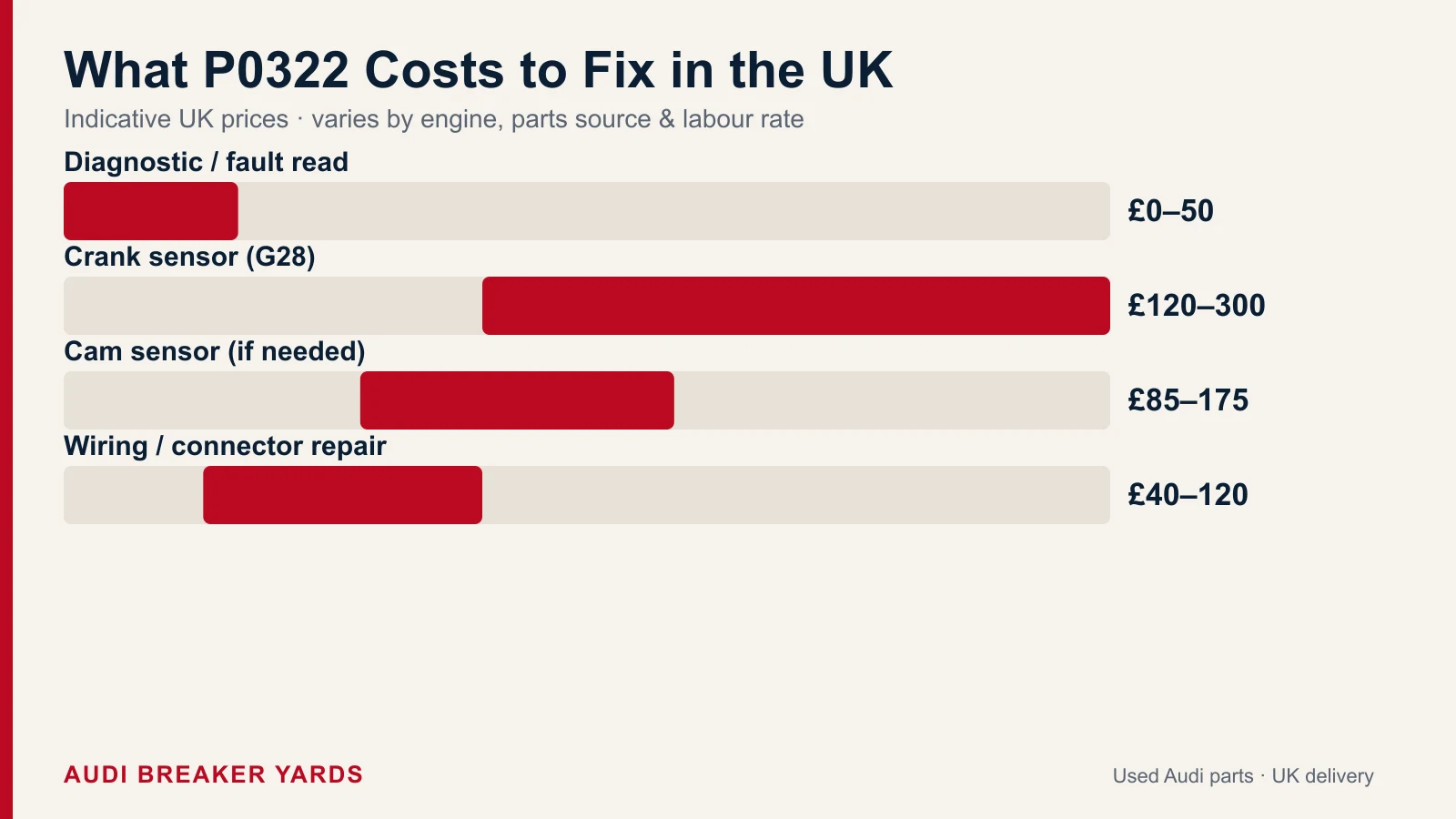
The part itself is cheap; what moves the total around is how buried the sensor is on your particular engine and your local labour rate. Indicative ranges only, not quotes; prices vary by condition, mileage, supplier and labour rate.
| Item | Indicative cost (£) | Notes |
|---|---|---|
| Diagnostic / fault read | £0–£50 | Varies by garage. |
| Crankshaft / engine-speed sensor (G28) replacement | £120–£300 (avg ~£150) | Parts + labour. Most P0322 fixes land here. |
| Camshaft position sensor (if implicated) | £85–£175 (avg ~£120) | Less common cause; only if diagnosis points to it. |
| Wiring / connector repair | £40–£120 | Depends on how much loom needs work. |
A used sensor from a donor car will trim the parts side of that further — handy on the engines where labour does the damage. If your fault turns out to be something deeper than a sensor, it pays to know what you're dealing with before you spend; my buyer's guide to Audi engines walks through the common engine codes, and you can browse our used Audi engines rather than writing the car off.
Is it safe to keep driving with P0322?
No — I wouldn't. Honestly, the choice is often made for you, because the car frequently won't start or will stall on its own. But even if it limps, an unreliable crank signal means the ECU can't time the engine correctly, and running on a bad or intermittent reference risks misfires and, in a worst case, mechanical damage. Get it diagnosed promptly. It's almost always a small, inexpensive job — far cheaper than ignoring it.
Looking for this part? Send us your Audi model and reg and UK Audi breakers who have it can quote you — free to enquire.
The bottom line
P0322 on an Audi or VW is a missing crankshaft/engine-speed signal, the part behind it (the G28 sensor) is cheap, and the fix is straightforward once it's properly diagnosed. Don't just blindly fit a sensor; check the plug and wiring first. But on a high-miles VAG car, a tired sensor is the safe bet. Need the part? Send us your model and engine code and UK breakers who have one can quote you.
Sources
- P0322 means "Ignition/Distributor Engine Speed Input Circuit – No Signal" and on VAG cars refers to the engine-speed/crankshaft (G28) reference sensor. ross-tech.com, vwtuning.co
- Symptoms include the engine not starting or stalling, an inoperative tachometer, misfires/loss of power, and a flashing glow-plug light on diesels. ross-tech.com, vwtuning.co
- The most common cause is a failed crankshaft/engine-speed sensor, with higher-mileage four-cylinder VAG engines prone to it due to the sensor's hot location; wiring, a loose sensor and the camshaft sensor are secondary causes. vwtuning.co, obd-codes.com
- UK crankshaft position sensor replacement averages ~£150, ranging £120–£300; UK camshaft position sensor replacement typically £85–£175 (avg ~£120). clickmechanic.com, clickmechanic.com