Audi & VW P0171 Fault Code Explained: System Too Lean Causes, Diagnosis & Repair Cost
If you've pulled a P0171 off your Audi or VW and the car's idling rough, hesitating, or sipping more fuel than it should, this is the page you want. Let me keep it plain. P0171 reads as "Fuel Trim, System Too Lean (Bank 1)". In normal English, your engine is getting too much air or not enough fuel, and the ECU has run out of room to correct it. On VAG engines (Audi, VW, SEAT, Škoda) it's nearly always an air leak the engine can't account for, and the good news is the most common fixes are cheap.
Looking for this part? Send us your Audi model and reg and UK Audi breakers who have it can quote you — free to enquire.
What P0171 actually means on an Audi or VW
Your engine wants a roughly 14.7:1 air-to-fuel ratio. The ECU watches the oxygen sensor and trims fuel up or down to hold that mix, and those corrections are called fuel trims. A healthy short and long term trim sits within about plus or minus 5%. When the ECU has to keep adding fuel and the trims climb past roughly +25% to compensate for a persistent lean reading, it gives up and logs P0171.
"Bank 1" simply means the side of the engine with cylinder number one. On most VAG four-cylinder engines there's only one bank anyway, so on a 1.4 TSI, 1.8/2.0 TFSI or a 2.0 TDI you can read P0171 as "the whole engine is running lean." The code is telling you the symptom, not the cause. The job is to find where the extra air is sneaking in, or why the fuel side has gone weak.
The symptoms you'll notice
A lean engine rarely keeps it to itself. The usual tells are:
- Rough or lumpy idle — worst at a standstill, sometimes with a faint surge as the ECU hunts for a stable mixture.
- Hesitation and flat spots when you put your foot down, especially from low revs.
- Lean misfire — a stumble or stutter that can drag a misfire code along with it.
- Worse fuel economy, which sounds backwards for "too much air," but the constant fuel-adding and poor combustion cost you at the pump.
- Idle surging or near-stalling at junctions and traffic lights.
- The engine warning light, naturally.
If the rough running has tipped over into a proper misfire, it's worth understanding that side of things too. A lean mixture is a classic misfire trigger, so a stored P0300 random misfire code sitting next to your P0171 usually points back at the same air leak rather than a separate fault.
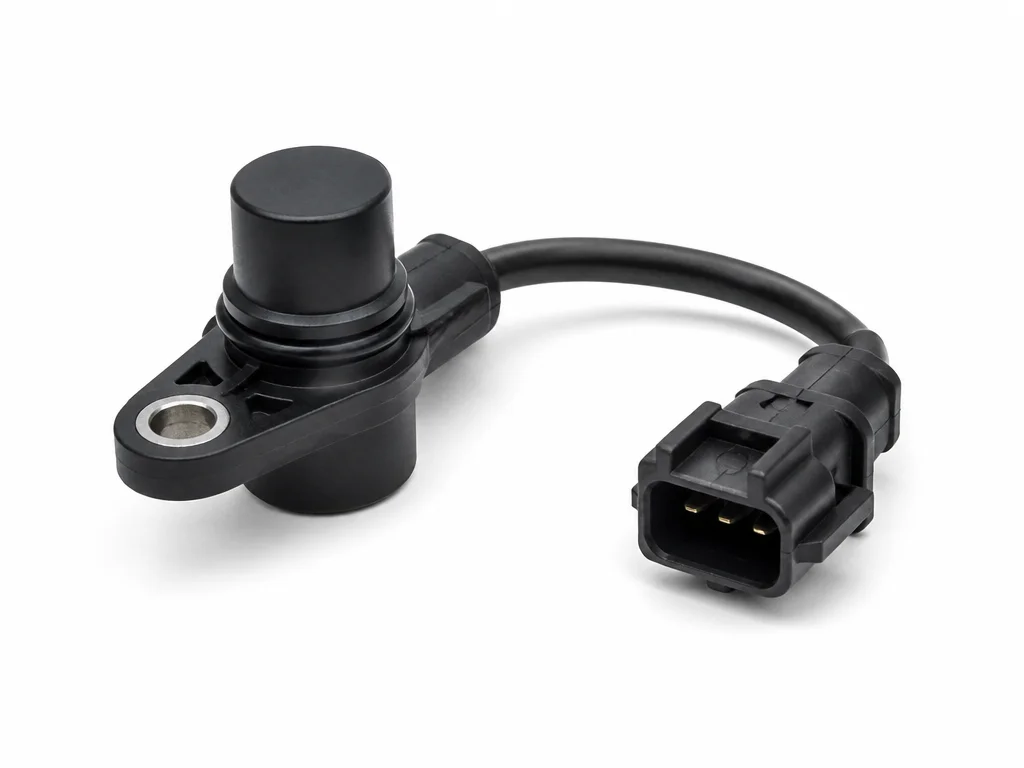
Audi MAF & Air Sensors
A dirty or failing mass airflow sensor under-reads the incoming air and starves the engine of fuel. Ask the supplying breaker whether the donor engine was running.
The real common causes
There are two families of fault here: unmetered air getting in (the engine breathes air the MAF never counted), and weak fuel delivery (the fuel side can't keep up). Here's the honest shortlist:
- Vacuum and boost leaks — by far the most common. Split or perished PCV and crankcase breather hoses, cracked intake boots, and a leaking intake manifold gasket all let in air after the MAF. On turbo TSI/TFSI engines a split boost pipe does the same under load.
- A stuck or failed PCV valve — the crankcase ventilation system on VAG engines is a notorious lean-code source when the diaphragm tears or the valve sticks open.
- A dirty or faulty MAF sensor — it under-reports airflow, so the ECU adds too little fuel. Sometimes a clean fixes it; sometimes it needs replacing.
- Weak fuel delivery — a failing fuel pump, a clogged fuel filter, dirty or restricted injectors, or a tired fuel pressure regulator all leave the mixture short of petrol.
- An exhaust leak upstream of the oxygen sensor — a leaky manifold or downpipe joint draws in fresh air past the sensor, fooling it into reading lean.
How to diagnose P0171 step by step
Don't throw parts at a lean code. There's a sensible order that finds it fast:
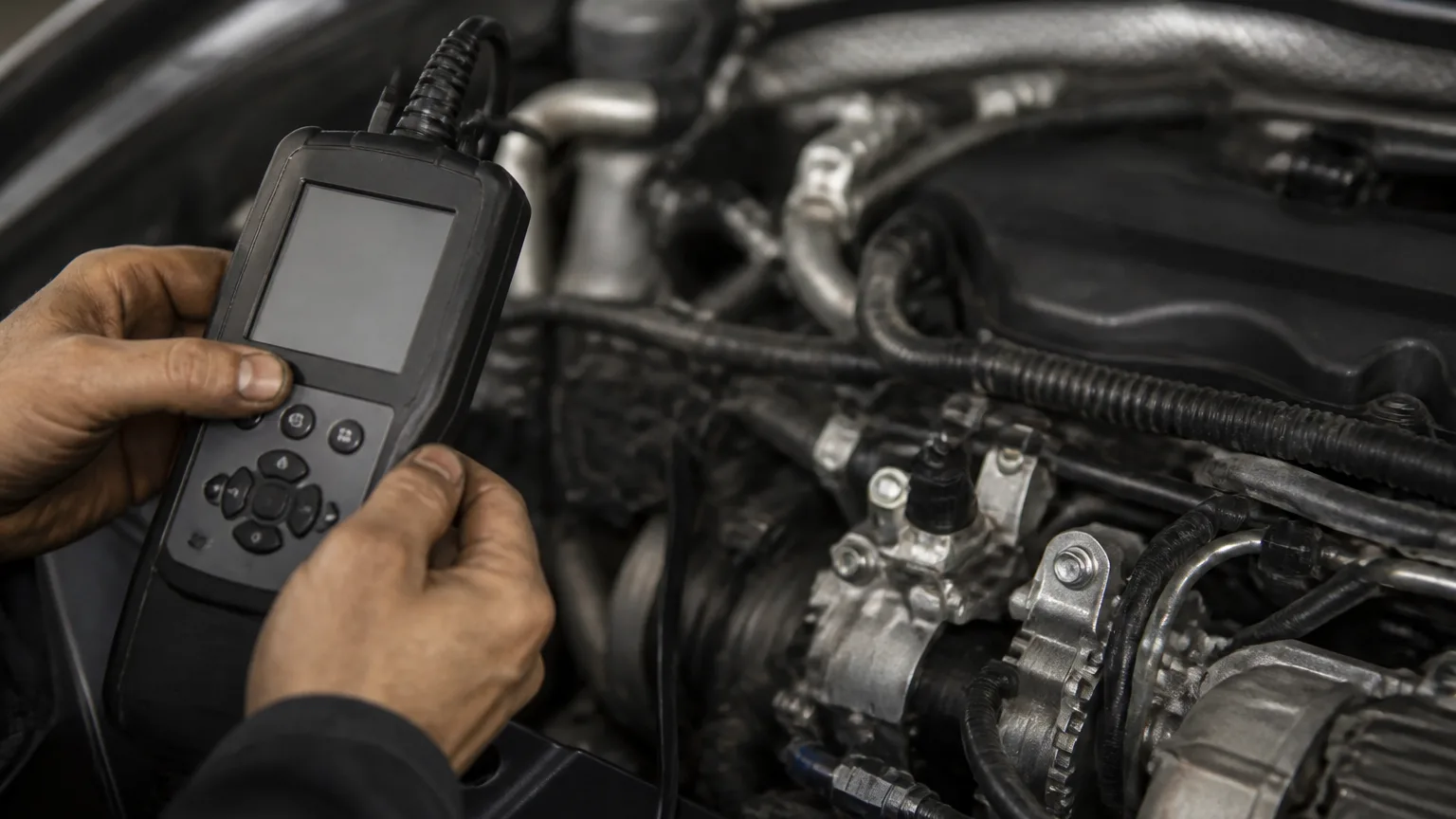
- Read the fuel trims on a VAG-capable scanner (VCDS or OBDeleven). High positive short and long term trims confirm the engine really is lean and how hard it's compensating.
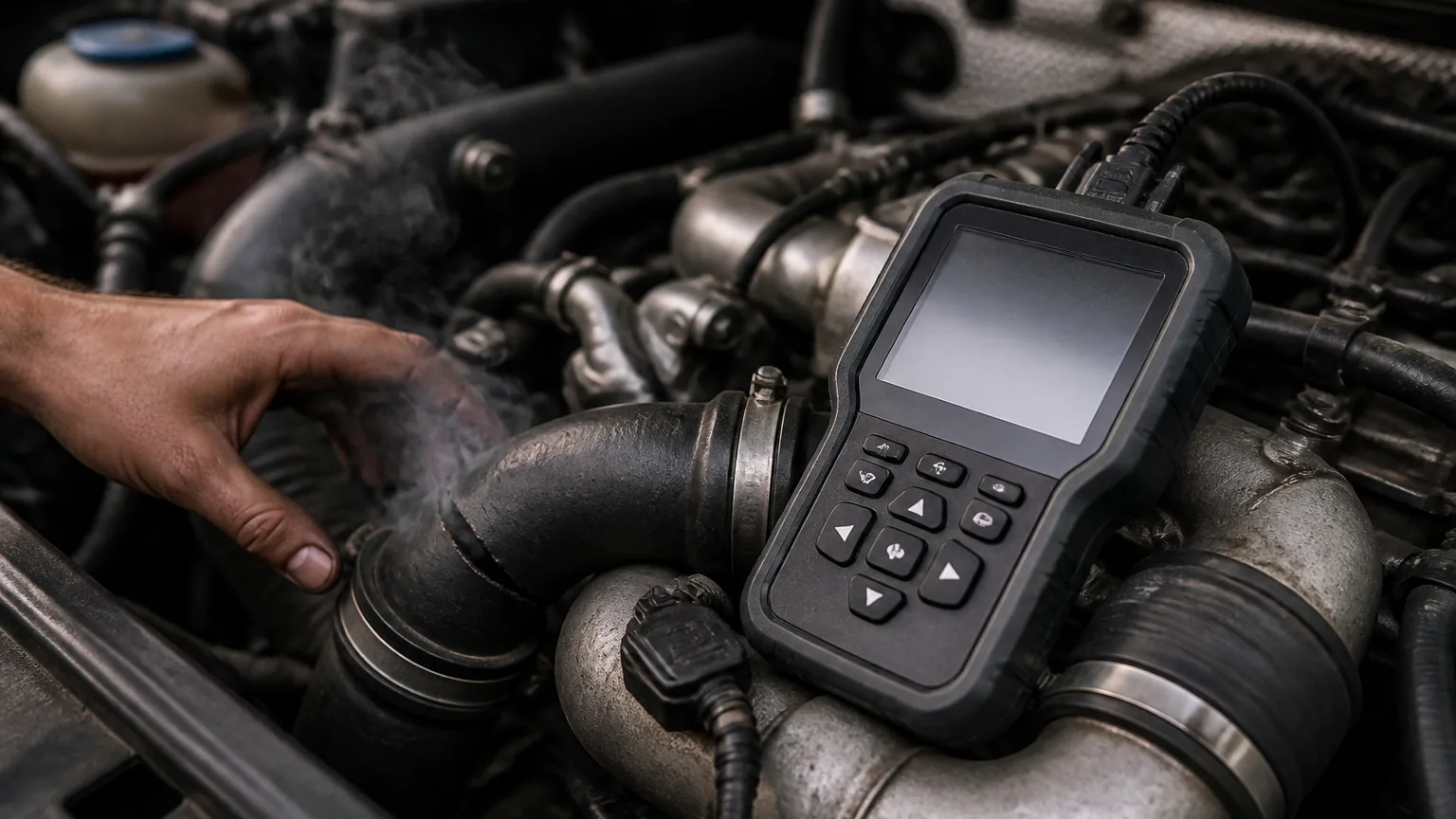
- Smoke test for leaks — pump smoke into the intake and crankcase system and watch where it weeps out. This finds split breather hoses, intake boots and manifold-gasket leaks in minutes and is the single most useful test for this code.
- Check the MAF in live data — compare the airflow reading against spec at idle and on a rev. A lazy or low MAF figure points the finger at the sensor.
- Check fuel pressure and the PCV — if the air side is sealed, test fuel pressure under load and inspect the PCV valve for a torn diaphragm or stuck plunger.
- Inspect upstream exhaust joints — a leak before the O2 sensor will mimic a lean fault, so rule out the manifold and downpipe gaskets.
That order matters because the cheap, common stuff sits at the top. If you've already chased other VAG lean-adjacent codes, my walkthrough of the P0106 MAP/boost-pressure code covers the same intake and sensor territory and is worth a read if your fault flips between codes.
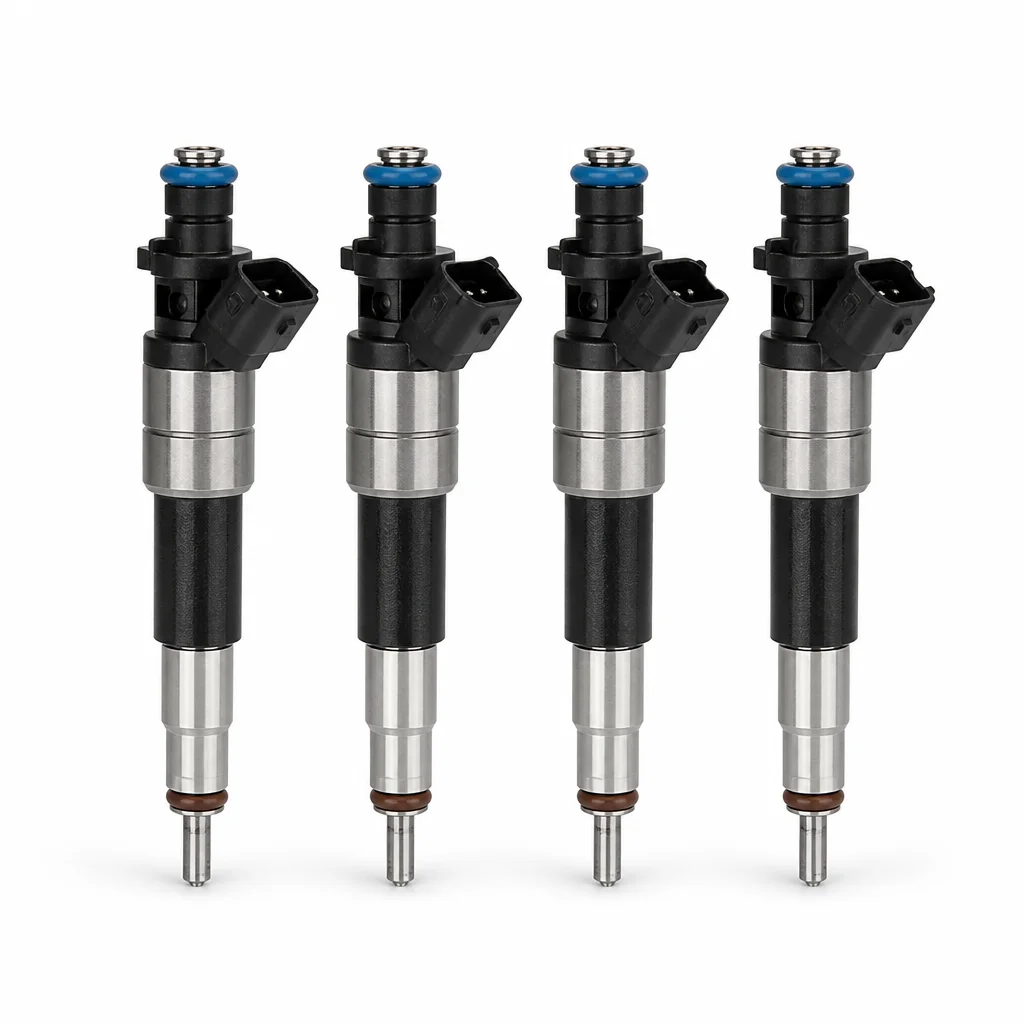
Audi Fuel Injectors
Dirty or restricted injectors can leave a cylinder short of fuel and tip the trims lean. Quote your engine code so the right injectors are matched.
How it gets fixed
The fix follows the cause. A split breather hose, cracked intake boot or leaking PCV is the cheapest and most common outcome: replace the offending pipe or valve, clear the code, watch the trims settle back toward zero. A dirty MAF often responds to a proper clean, but a genuinely faulty one needs replacing. If the fuel side is the problem, you're looking at a fuel filter, a fuel pump, or attention to the injectors. Whatever the part, the trims should drop back into range once the leak is sealed or the fuel supply restored. You can request used Audi A3 parts and sensors through us, and the same goes for the Q5 range.
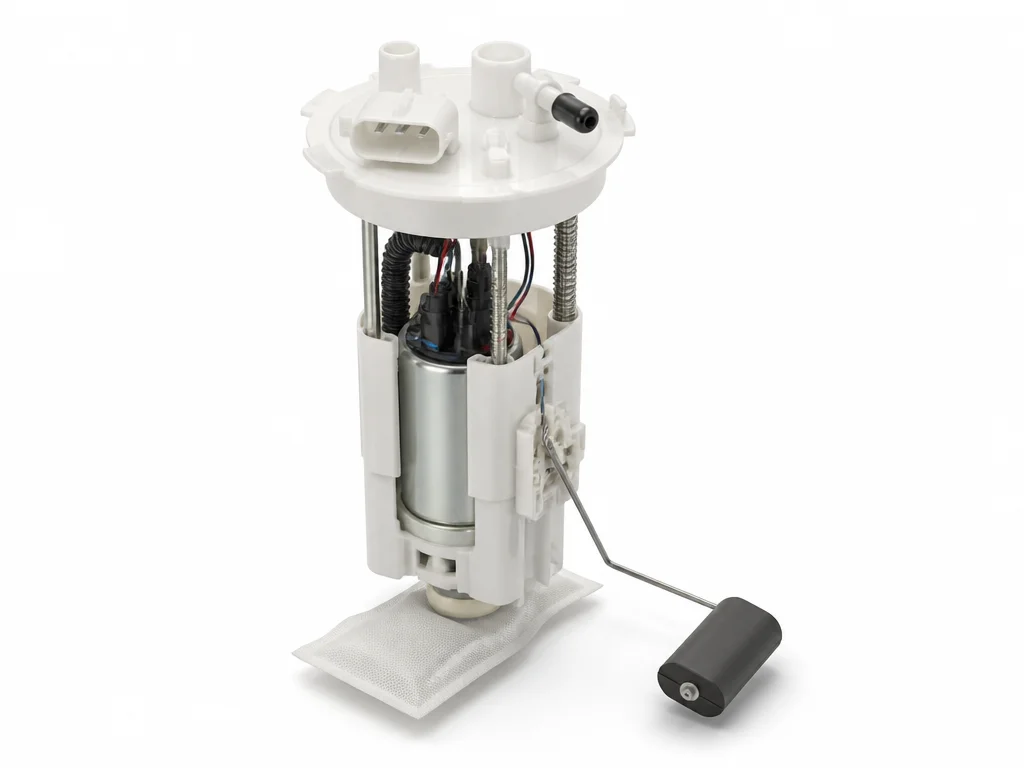
Audi Fuel Pumps
When low fuel pressure is starving the engine, a used pump can fix the lean condition for a fraction of dealer money. Quote your engine code so the right pump is matched.
What it should cost in the UK
The spread on P0171 is wide, because it depends entirely on what's actually leaking or failing. A split hose is pocket money; a fuel pump is a proper bill. Indicative ranges only, not quotes; prices vary by condition, mileage, supplier and labour rate.
| Fix | Indicative cost (£) | Notes |
|---|---|---|
| Smoke test / diagnostic | £40–£60 | Best first spend; pinpoints air leaks fast. |
| Vacuum / PCV breather hose | £40–£100 | The most common and cheapest fix. |
| PCV valve replacement | £80–£180 | Parts + about an hour's labour. |
| Intake manifold gasket | £120–£250 | More involved; only if the gasket is leaking. |
| MAF sensor replacement | £170–£350 | A used MAF cuts the parts side. |
| Fuel pump replacement | £300–£900 | The big one; used pumps save a lot here. |
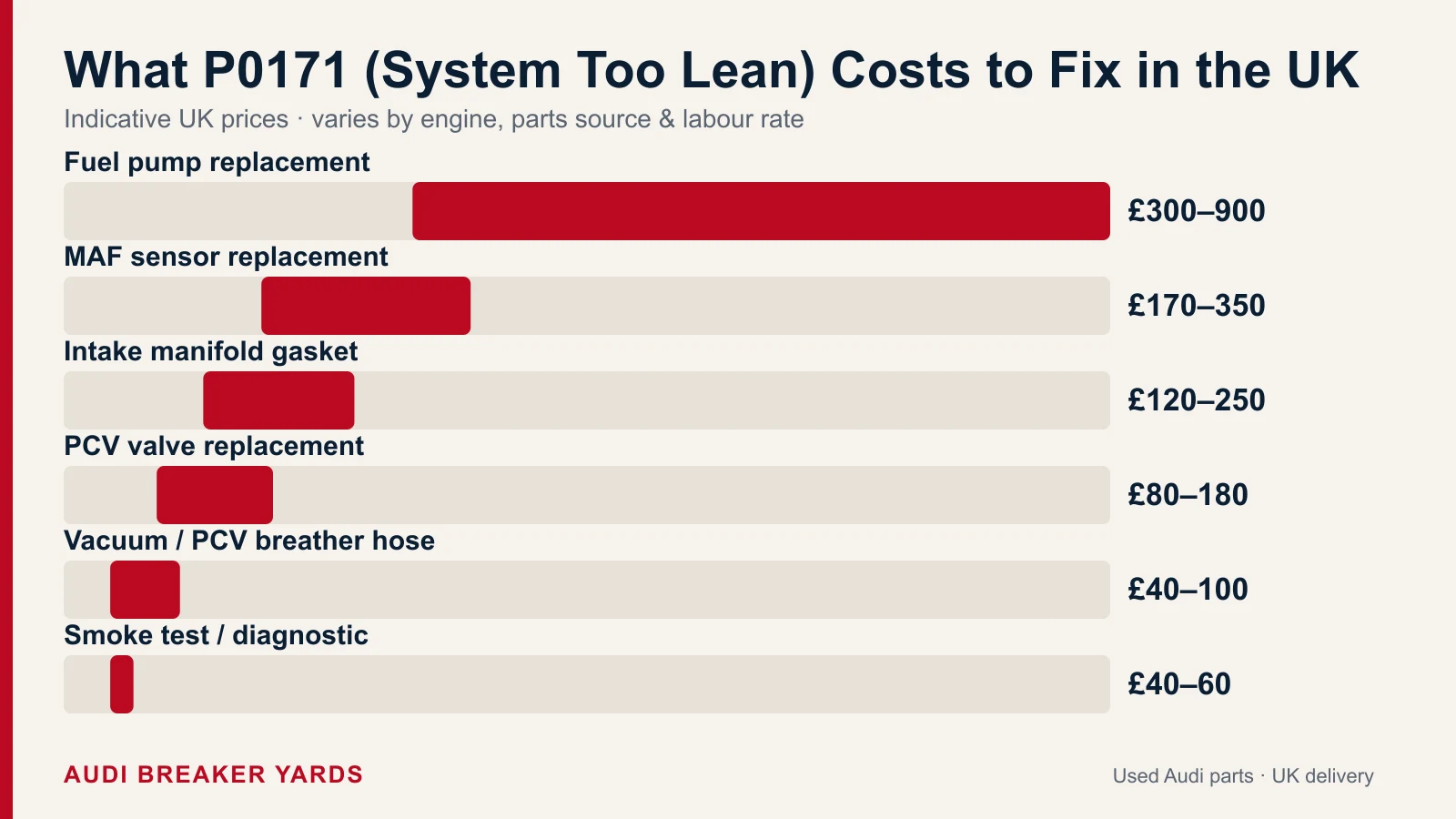
The reason a used part makes sense here is that the parts cost, not the labour, is what stings on the MAF and fuel pump end of the table. If your diagnosis points to a deeper engine issue rather than a simple leak, it pays to know what you're dealing with first: our used Audi engines are there if the worst happens, but for a lean code that's very rarely where you end up.
Looking for this part? Send us your Audi model and reg and UK Audi breakers who have it can quote you — free to enquire.
Is it safe to keep driving with P0171?
Short term, yes — the car will usually drive, and a quick run to the garage won't hurt it. But it isn't a code to live with. A persistently lean mixture runs the combustion hotter than designed, and over time that can damage pistons, valves and the catalytic converter, on top of the misfires and lost economy you're already feeling. Treat P0171 as a soon job, not a someday job. The most likely fix is cheap, and the longer you leave a genuine lean condition, the more it can cost you.
The bottom line
P0171 on an Audi or VW means the engine is running too lean on bank 1, and on VAG cars that's usually unmetered air from a split breather hose, a cracked intake boot, a tired PCV or a lazy MAF, with weak fuel delivery the next thing to check. Read the fuel trims, smoke test for leaks, then verify the MAF and fuel pressure before you spend. Need the part once you've found it? Send us your model and engine code and UK breakers who have it can quote you.
Sources
- P0171 means "Fuel Trim, System Too Lean (Bank 1)" — too much air or too little fuel — and is logged when fuel trims exceed roughly +25% against a normal range of about plus or minus 5%. obdeleven.com, kbb.com
- Common causes are vacuum/boost leaks (split PCV and breather hoses, intake boots, leaking manifold gaskets, a stuck PCV), a dirty or faulty MAF sensor, weak fuel delivery (failing pump, clogged filter, dirty injectors) and an exhaust leak upstream of the O2 sensor. obdeleven.com
- Symptoms include rough idle, hesitation, lean misfire, poor fuel economy and idle surging or stalling. kbb.com, obdeleven.com
- Diagnosis starts with reading fuel trims, then a smoke test for air leaks, then checking MAF live data and fuel pressure. obdeleven.com
- A persistent lean condition runs combustion hotter than designed and can cause engine and catalytic-converter damage if ignored. obdeleven.com, kbb.com
- UK costs: vacuum hose £40–£100, intake manifold gasket £120–£250, MAF sensor replacement £170–£350, fuel pump replacement £300–£900. bumper.co, bumper.co