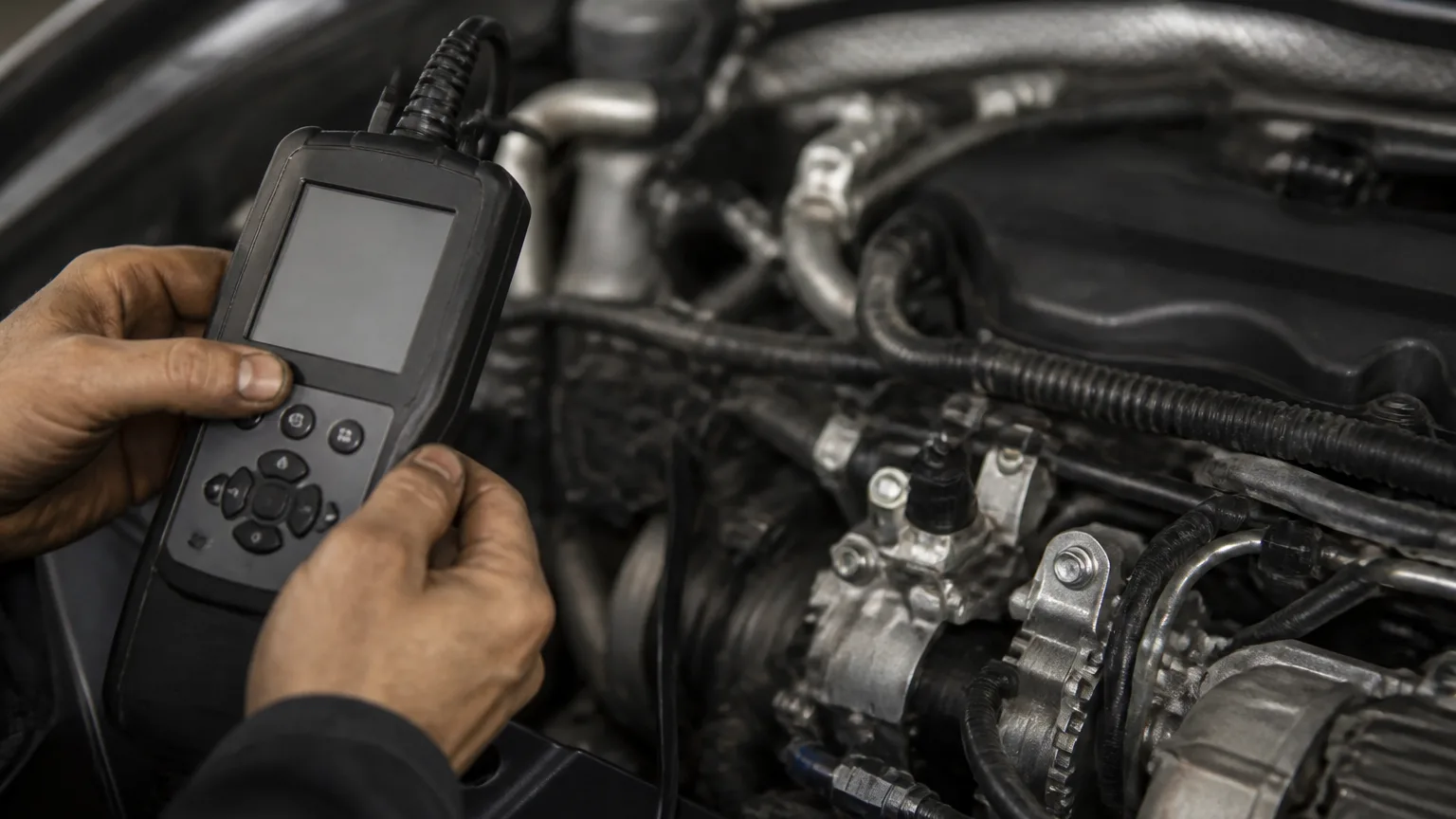
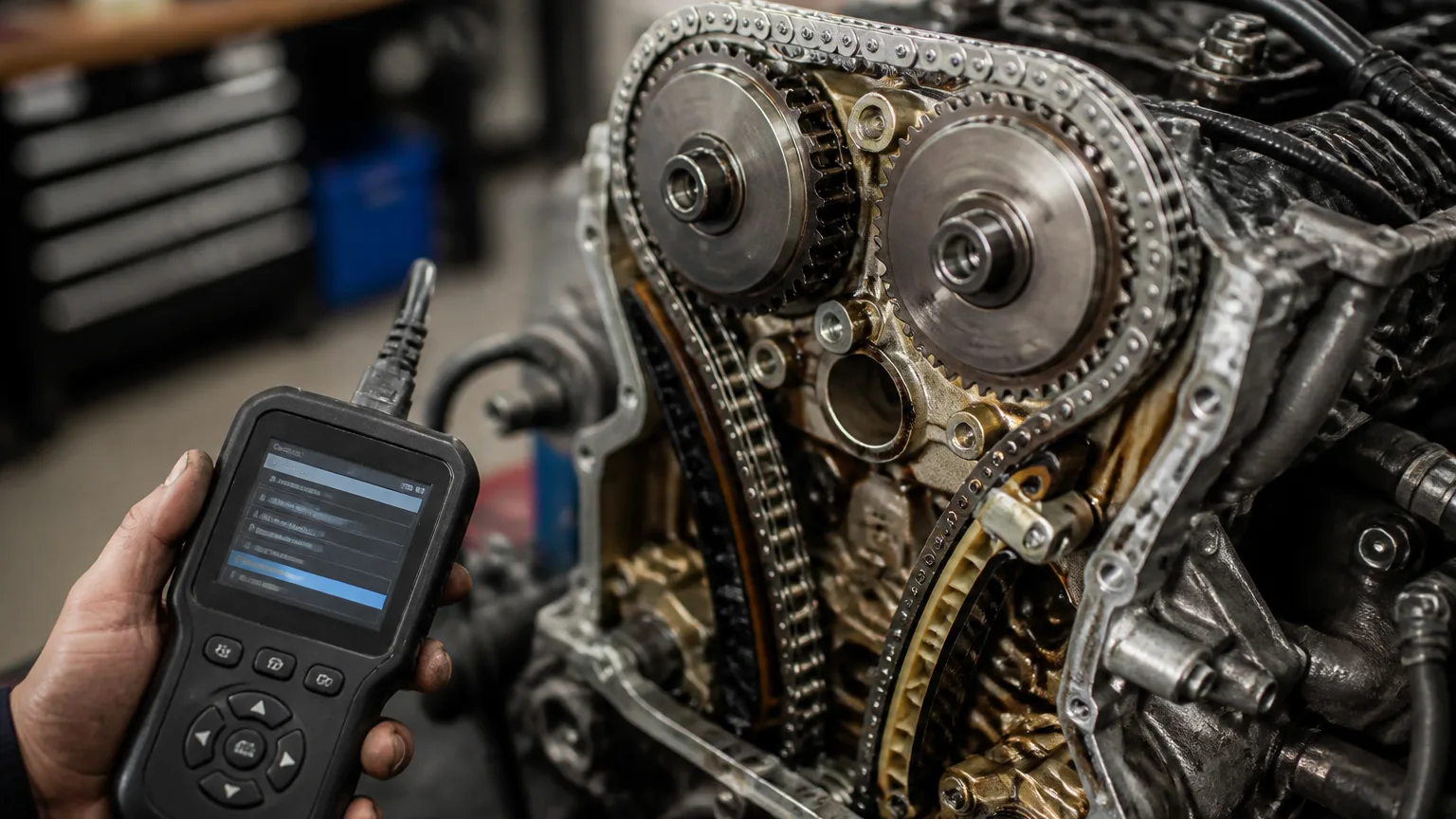
If your scanner has just spat out a P0106 on your Audi or VW, here's the short version: the car's manifold absolute pressure (MAP) sensor — or, on turbo cars, the boost-pressure sensor — is feeding the ECU a reading that doesn't add up. The code is officially "Manifold Absolute Pressure / Barometric Pressure Sensor Range/Performance". In plain English: the pressure number the sensor is reporting is implausible for what the engine is actually doing, so the ECU flags it. Let me walk you through what's really going on before you spend money guessing.
Looking for this part? Send us your Audi model and reg and UK Audi breakers who have it can quote you — free to enquire.
What P0106 actually means on an Audi or VW
Your ECU leans on the MAP sensor to work out how much air is getting into the engine, which sets the fuelling and (on turbos) the boost target. At key-on, engine off, that sensor should read roughly the same as the outside air pressure, the barometric value. Once the engine's running it tracks vacuum at idle and pressure under load. P0106 is set when the value the sensor reports falls outside the window the ECU expects for the current throttle position and load. It isn't saying the circuit is dead (that's a different code); it's saying the reading is there but doesn't make sense.
The important thing to understand is that the sensor itself is often innocent. A perfectly good MAP sensor will report a wrong-looking number if there's a vacuum or boost leak upstream, because the actual pressure in the manifold genuinely is wrong. So P0106 is as much a "something's leaking or restricted" code as it is a "sensor's gone bad" code. That distinction is what stops you throwing a new sensor at a problem that a £5 hose clip would have fixed.
The symptoms you'll notice
P0106 usually comes with running issues you can feel, not just a light on the dash:
- Hesitation and poor acceleration — the fuelling is off because the air reading is off.
- Reduced power or limp mode — the ECU pulls power to protect the engine when it can't trust the boost/air signal.
- Rough idle and hard starting — a wrong pressure reading upsets the idle and cold-start mixture.
- Poor fuel economy — the engine runs richer or leaner than it should.
- Black smoke on diesels — a TDI fed a bad boost/MAP reading can over-fuel and smoke.
- The engine warning light, of course, and often a stored P0106.
If you're seeing limp mode and a turbo-flavoured fault alongside it, it's worth reading up on the P0299 underboost code too, because a boost leak that fools the pressure sensor can trip both. And if the running fault feels more like a lean misfire than a boost problem, the P0171 system-too-lean code often shares the same root cause: an unmetered air leak.
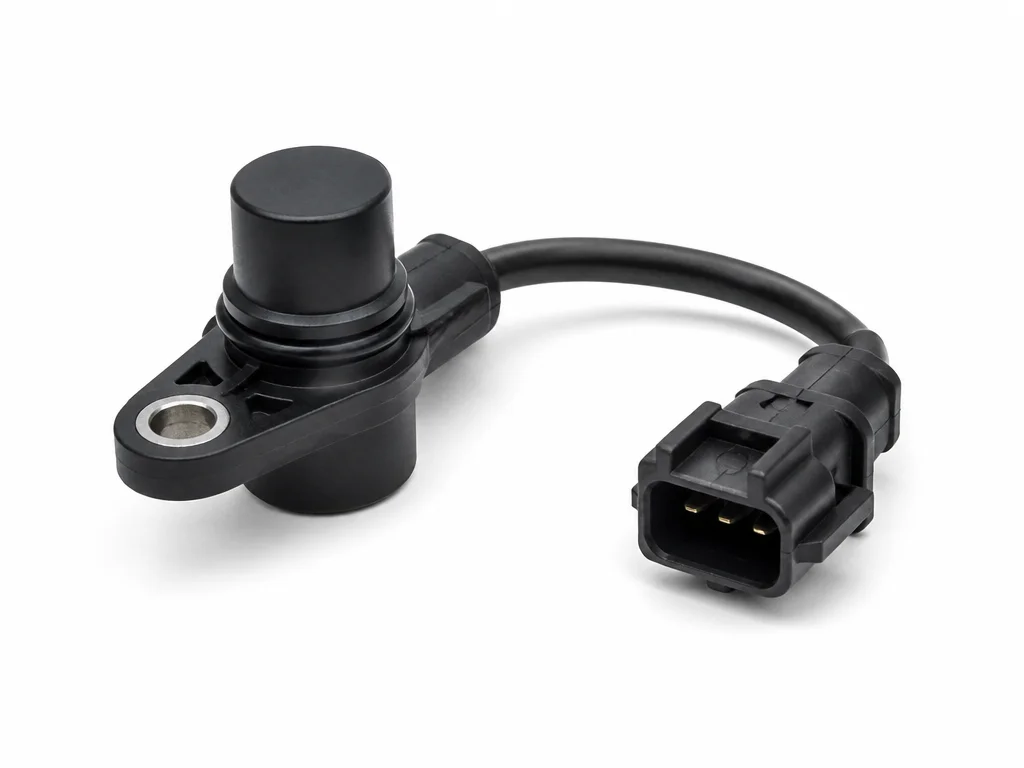
Audi MAP / Boost-Pressure Sensors
If diagnosis points at the sensor rather than a leak, a used MAP or boost-pressure sensor clears P0106 for a fraction of dealer money. Ask the supplying breaker whether the donor engine was running.
The real common causes
Here's the honest shortlist on a VAG car:
- A vacuum or boost leak — a split intake hose, a perished pipe, a leaking intercooler boot or a loose clamp. The sensor reads true; the pressure is genuinely wrong.
- A dirty or oil-fouled sensor port — carbon and oil mist from the crankcase breather coat the sensing element, so it reads lazily. Very common on higher-mileage TFSI/TSI petrols.
- A faulty MAP or boost-pressure sensor — they do drift and fail outright with age and heat.
- Wiring or connector trouble — corrosion, a chafed loom or oil creeping into the plug.
- A dirty throttle body — a known P0106 trigger on VWs and Audis, because it skews the airflow the ECU expects.
- Intake restriction — a heavily clogged air filter, or on diesels a badly blocked DPF raising back-pressure.
How to diagnose P0106 properly
Don't just bolt on a sensor. This is the sensible order:
- Read the live data with a VAG-capable scanner (VCDS or OBDeleven is ideal). At key-on, engine off, the MAP reading should sit close to the barometric pressure value. If it doesn't, that's a strong sign the sensor or its port is at fault.
- Watch MAP under load — it should rise smoothly with throttle. A flat, lazy or jumpy trace points at the sensor or a leak.
- Inspect and clean the sensor — pull it, check the port for carbon and oil, and clean the element with proper MAF/sensor cleaner (never scrub it).
- Hunt for leaks — visually check every intake and boost hose for splits, then ideally run a smoke test or a boost-leak test to find the ones you can't see.
- Check the wiring and plug for corrosion, chafing or oil contamination.
- Rule out restriction — check the air filter, and on a diesel consider DPF back-pressure if everything else is clean.
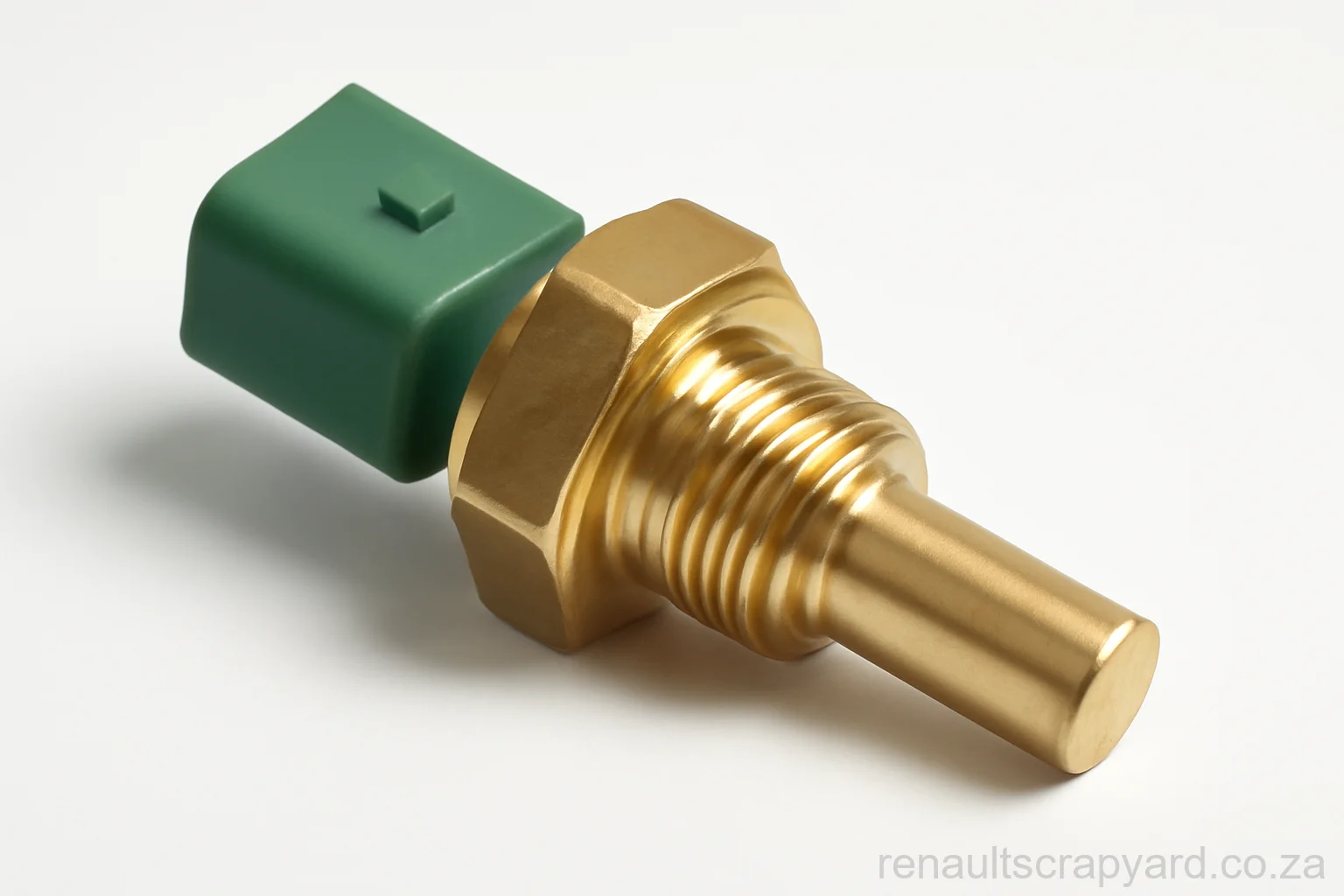
Intake & Charge Temperature Sensors
On many VAG engines the boost-pressure and intake-air-temp sensors live in one combined unit, so a P0106 chase sometimes ends here. Quote your engine code so the right combined sensor is matched.
How it gets fixed
The fix depends entirely on what the diagnosis turns up. If it's a dirty sensor, a careful clean can be all it needs. If the sensor's genuinely failed, it's a quick swap on most engines: one plug, one or two bolts. If it's a leak, you're replacing the offending hose, boot or clamp, which is cheap on parts but can eat labour if it's buried. A dirty throttle body gets cleaned and re-adapted. The thing to remember is that the sensor is rarely the expensive bit; the cost lives in the hunt for the leak.
If your chase ends at a hard part rather than a hose, a used sensor or charge pipe keeps the bill sane. Whether you're running an A4 or one of the turbo-petrol A3 models, send us your engine code and UK breakers who have the right unit can quote you.
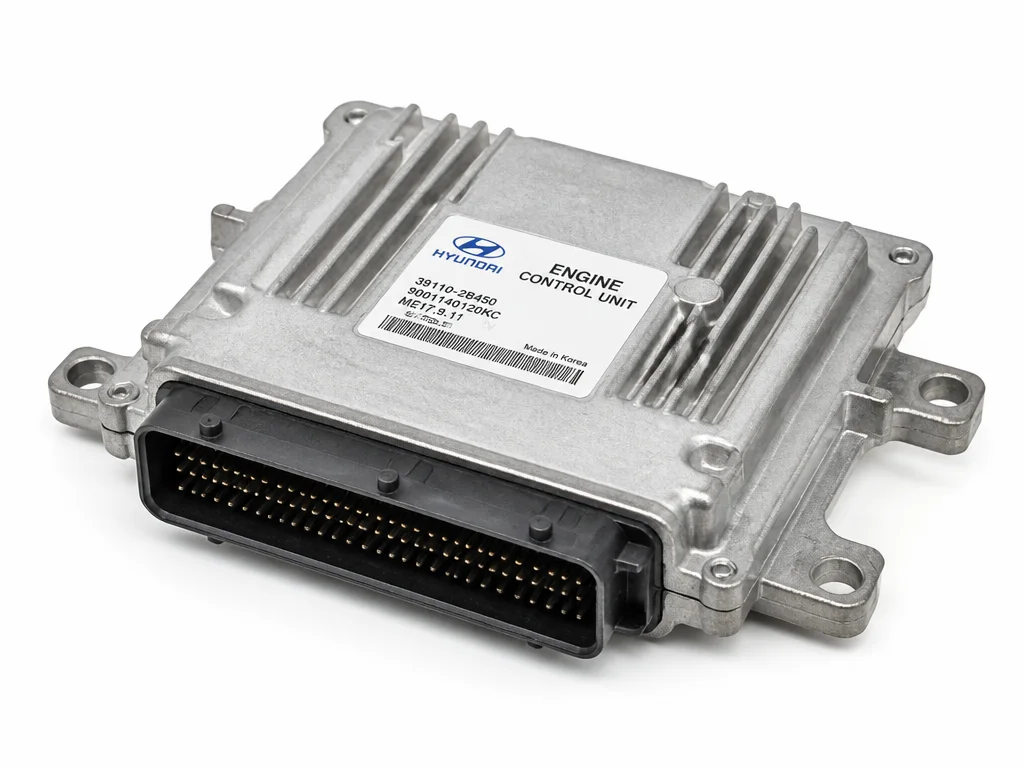
Audi Engine ECU / Control Modules
In the rare case where the sensor, wiring and intake all check out clean, the fault sits in the module. A replacement ECU must be matched by part number, and coding requirements should be checked before you buy.
What it should cost in the UK
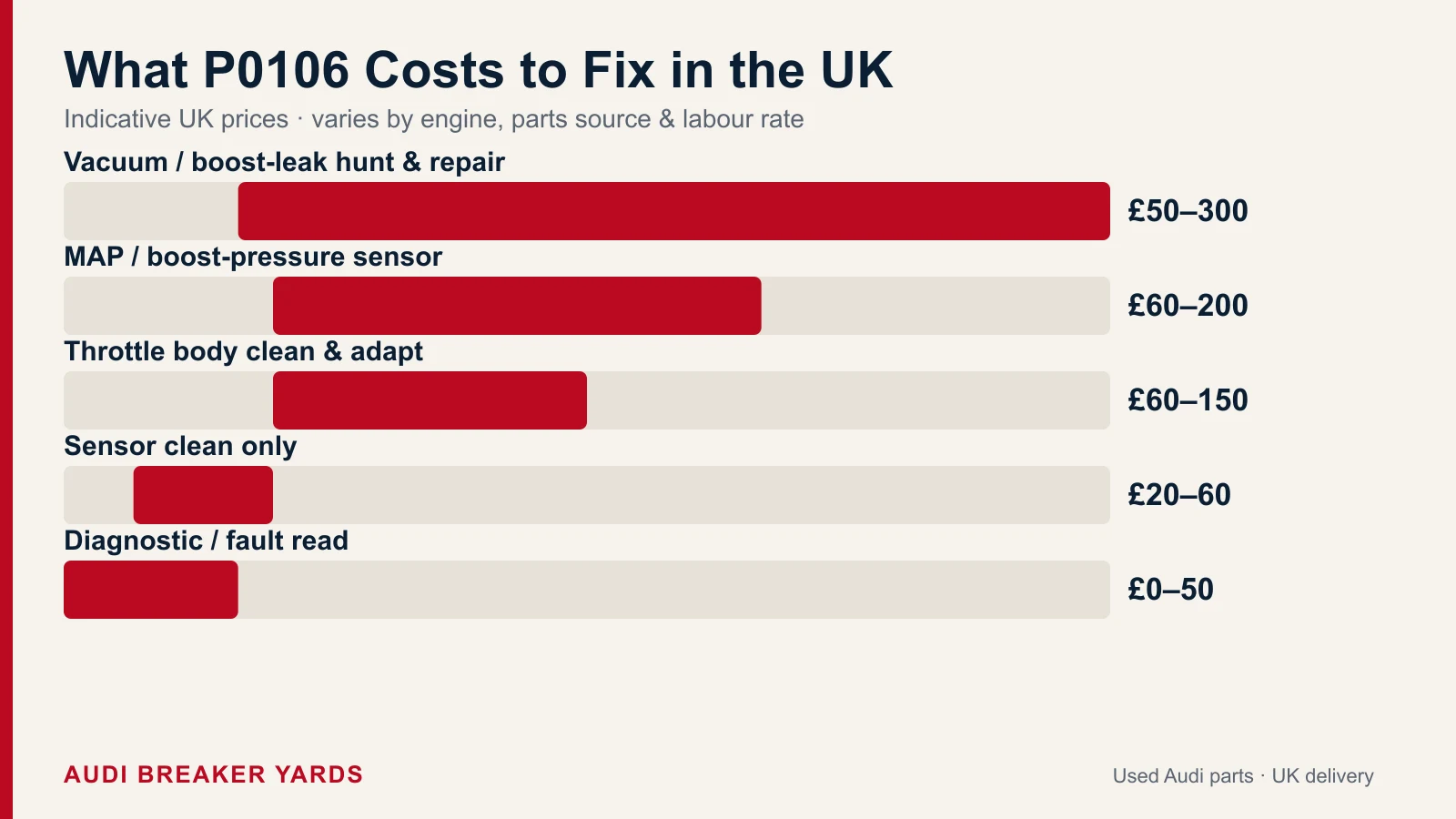
The sensor itself is cheap; what moves the total is your local labour rate and, critically, how long it takes to find a leak. Indicative ranges only, not quotes; prices vary by condition, mileage, supplier and labour rate.
| Job | Indicative cost (£) | Notes |
|---|---|---|
| Diagnostic / fault read | £0–£50 | Varies by garage. |
| MAP / boost-pressure sensor replacement | £60–£200 (most ~£110–£150) | Parts £15–£60, labour 1–2 hours. Premium models sit higher. |
| Sensor clean only | £20–£60 | If the sensor and port are just fouled, not failed. |
| Vacuum / boost-leak hunt & repair | £50–£300+ | Hose parts are cheap; smoke-testing and access drive the labour. |
| Throttle body clean & adapt | £60–£150 | If a dirty throttle body is the trigger. |
A used sensor from a donor car trims the parts side further, which helps most on the engines where labour does the damage. If the running fault turns out to be deeper than a sensor or a hose, it pays to know what you're dealing with before you spend; you can browse our used Audi engines rather than writing the car off over a fault that started as a £5 split pipe.
Looking for this part? Send us your Audi model and reg and UK Audi breakers who have it can quote you — free to enquire.
What to do first
Before anything else: read the live data and look for leaks. Compare the MAP reading to barometric pressure at key-on, engine off, then visually check every intake and boost hose for splits and loose clamps. That quick check often tells you whether you're buying a sensor or a hose clip. Don't drive hard on a car in limp mode or blowing black smoke, get it diagnosed promptly, because a boost leak left alone can cook a turbo and turn a cheap job into an expensive one.
The bottom line
P0106 on an Audi or VW means the MAP or boost-pressure reading is implausible, and the cause is just as often a leak or a fouled sensor port as a dead sensor. Diagnose before you buy: live data, a leak check, a clean. When it does come down to a part, a used sensor fixes it cheaply. Send us your model and engine code and UK breakers who have the right unit can quote you.
Sources
- P0106 is "Manifold Absolute Pressure/BARO Sensor Range/Performance", set when the ECU receives implausible MAP/BARO readings, with causes including a faulty sensor, vacuum leaks, wiring faults and EGR/intake issues. obd-codes.com
- Symptoms include hesitation, reduced power and limp mode, rough idle, poor economy, and black smoke on diesels; on VWs/Audis a dirty throttle body, boost leaks or split hoses are common triggers. ziptuning.com
- Diagnose by comparing the MAP reading to barometric pressure at key-on engine off, cleaning the sensor port, and smoke/boost-leak testing the intake before condemning the sensor. ziptuning.com
- UK MAP sensor replacement typically runs £53–£275, with most drivers paying about £110–£150 (parts ~£15–£60, labour 1–2 hours). costdetails.com, cartreatments.com